


A pillow does more than feel soft or firm. It affects how your neck, shoulders, and upper back rest through the night, and you usually notice when the support is wrong the next morning.
If you are trying to figure out how to choose a pillow, start with how you sleep and the kind of support your body actually needs.
1. Start With Your Sleep Position
Why Sleep Position Should Guide Your Choice
Start with pillow height, or how high the pillow sits once your head is resting on it.
That height changes with sleep position because the space between your head and the mattress is different for side, back, and stomach sleepers.
A simple starting point:
-
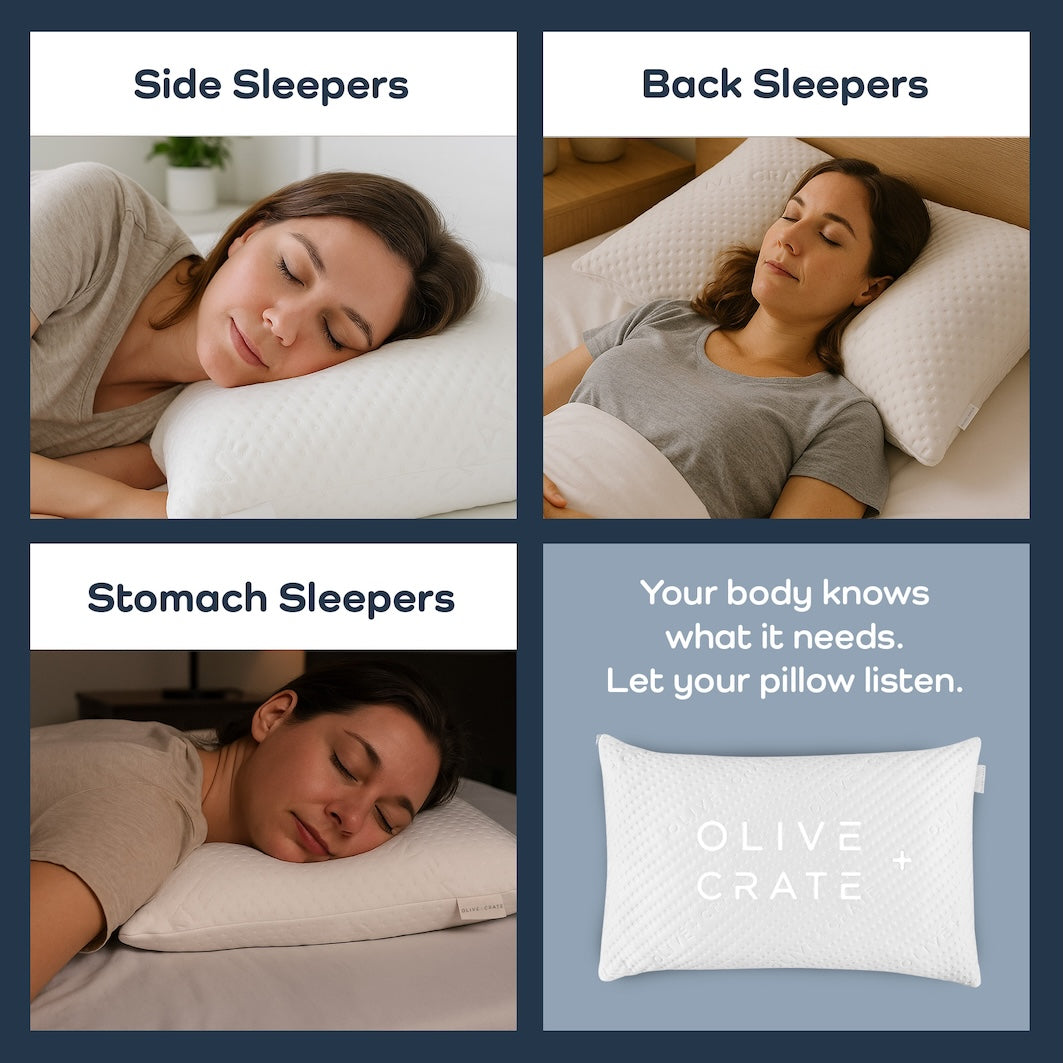
Side sleepers need more loft
-
Back sleepers need medium loft
-
Stomach sleepers need very little loft
Height gives you the right starting shape, but support decides whether that shape still works after a few hours.
What Proper Pillow Support Should Feel Like
Support is what keeps a pillow from losing shape once your head settles into it.
The main types of support:
-
Firm support: holds height without flattening too quickly
-
Even support: keeps your head level across the pillow
-
Jaw pressure: happens when one side feels too high or too firm
When support is right:
-
Your head stays level
-
Your shoulders relax
-
Your jaw stays neutral
Lie in your usual sleep position for a few minutes. If you keep adjusting, the height or support is probably off.
If you are unsure where to begin, understanding the best pillow height for every sleeper makes the next step easier.
2. Choose Loft Based on How You Sleep
Pillow Guide by Sleep Position
Loft means the height of the pillow after your head is resting on it.
Once you know your sleep position, loft is the quickest way to narrow down what kind of pillow will feel right.

Use your usual sleep position as the starting point for pillow height and support.
How to Choose a Pillow for Side Sleepers
Side sleepers usually need more loft because the pillow has to fill the space between the shoulder and the side of the head.
They also need firm support, which means the pillow should keep that height through the night instead of sinking too much.
What usually works best:
-
Medium to high loft
-
Firm support
-
Fill that keeps shape
Without enough height, the neck bends downward and the shoulder takes extra pressure.
How to Choose a Pillow for Back Sleepers
Back sleepers usually need medium loft so the neck stays supported without lifting the head too far forward.
They usually do best with even support, which means the pillow feels balanced under the head instead of sinking more in one area.
A good starting point:
-
Medium height
-
Even support
-
Soft surface feel
Surface feel is what you notice first when you lie down. A pillow can feel soft on top and still stay supportive underneath.
Too much loft often pushes the chin toward the chest.
Lower Loft Often Works Best for Stomach Sleepers
Stomach sleepers usually need the lowest profile because even moderate height can twist the neck.
A lower pillow helps reduce:
-
Neck rotation
-
Jaw pressure
-
Upper-back strain
If you move often during sleep, even sleep habits like starfish sleeping can change how much loft feels right.
3. Check Whether Pillow Height Feels Right
Signs Your Pillow Is Too High
Once you know your starting loft, the next step is checking how your body responds overnight.
A pillow is often too high if your head sits above a neutral line with your spine.
Common signs:
-
Chin lifts too much
-
Neck feels stiff
-
Shoulders tighten
Signs Your Pillow Is Too Low
A pillow is often too low if support disappears once your head settles into it.
This usually means the pillow starts at the right height but compresses too much under weight.
You may notice:
-
Shoulder pressure
-
Head dropping back
-
Frequent repositioning
Many people do better with adjustable options that let you fine-tune loft at home because small height changes are often enough.
4. Choose Fill Based on Support and Comfort
Which Type of Pillow Is Best for Sleeping Support
Once the loft feels right, fill determines whether the pillow keeps that support through the night.
Fill is the material inside the pillow that controls how quickly it compresses and how easily it returns to shape.
Memory foam usually gives steady support because it holds shape longer.
Latex feels lighter and springs back faster when you move.
Fiber fill feels softer but tends to flatten sooner.
A simple way to choose:
-
Memory foam for steady support
-
Latex for quicker response
-
Fiber fill for softness
Cooling Materials Can Change Sleep Comfort
A pillow can still feel uncomfortable if it traps too much heat.
Cooling materials help by controlling how much warmth stays near your face.
Look for materials that:
-
Let air move through
-
Reduce heat buildup
-
Stay dry overnight
Even small fabric differences matter, especially when sleep materials affect comfort by morning.
5. If Neck Pain Is Part of the Problem
How to Choose the Best Pillow for Neck Pain
Neck pain usually means the pillow is close, but still slightly off in height or support.
A pillow can feel soft and still fail if it loses shape once weight settles in.
What usually helps:
-
Stable loft
-
Even support
-
Gentle contour
Stable loft means the pillow keeps the same height through the night.
Gentle contour means the pillow supports the curve under your neck a little more directly.
Why Adjustable Pillows Often Help
When neck pain is involved, small changes usually work better than changing the pillow completely.
Adjustable pillows help because you can:
-
Remove fill
-
Add fill
-
Rebalance loft
That flexibility is one reason pillows for neck pain often work better over time.
6. Shoulder and Back Pain Need Different Support
Shoulder Pressure Usually Means the Pillow Is Too Low
Shoulder pain usually means the pillow is not fully filling the gap above the mattress.
That gap is often called the shoulder gap, which changes depending on body frame and mattress softness.
A better fit should:
-
Fill the shoulder gap
-
Reduce pressure
-
Keep the neck level
Back Pain Often Starts With Poor Head Position
Back sleepers usually feel discomfort when loft pushes the head too far forward.
This changes the upper spine angle even if the pillow still feels soft.
Signs this is happening:
-
Chin points forward
-
Upper back feels tight
-
Shoulders stay tense
Support Should Stay Consistent Through the Night
A pillow should feel the same after several hours, not just when you first lie down.
If support fades, it usually means the fill compresses faster than your body needs.
You may notice:
-
More turning
-
Morning tension
-
Less support by dawn
For ongoing tension, looking at back support often explains what the pillow is missing.
7. Know When It’s Time for a New Pillow
Signs Support Has Started to Break Down
A pillow usually shows wear before it feels unusable.
Look for:
-
Flattening
-
Clumping
-
Uneven loft
How to Choose a New Pillow When Sleep Changes
A new pillow often becomes necessary when your sleep setup changes.
That usually happens when:
-
Your mattress changes
-
Your sleep position shifts
-
Comfort feels inconsistent
That is often when checking replacement timing becomes useful.
8. Use Only the Pillows You Actually Need
How Many Pillows Should You Sleep With
One pillow is enough for most people if the loft is right.
Adding a second under your head often creates more angle than support.
A second pillow works better under:
-
Knees
-
Arms
-
Lower back
How to Set Up Pillows on a Bed Without Affecting Sleep
A simple setup works best:
-
Sleep pillow first
-
Decorative pillows removed
-
Support pillows where needed
A lot of discomfort starts when bed comfort changes night to night.
9. Buy for Fit, Not Just Brand
Why Adjustability Matters More Than Labels
A pillow often feels different after several nights. Your body notices support patterns more clearly over time.
Adjustability helps because you can:
-
Change loft
-
Test longer
-
Adjust gradually
Where to Buy Good Pillows Once You Know Your Needs
Before buying, check:
-
Loft details
-
Fill type
-
Trial options
If you are comparing options, pillows built around adjustable comfort usually offer more flexibility over time.
10. Small Details Can Improve Sleep More Than Expected
Pillowcases Affect Comfort Too
A pillowcase changes comfort more than many people expect.
It affects:
-
Surface feel
-
Warmth
-
Friction
Better Sleep Often Comes From Small Adjustments
Sometimes comfort improves without changing the pillow itself.
Try adjusting:
-
Fabric texture
-
Room temperature
-
Pillow layering
Even choosing softer pillowcases can make a familiar pillow feel better.