


The pillow you sleep on quietly shapes how your spine settles overnight. Choosing the best pillow for back pain is about alignment, comfort, and letting the body fully let go.
Gentle note: Olive + Crate isn’t a medical organization. The information shared here is research-based and intended for general education, not medical guidance.
What Is the Best Pillow for Back Pain?
The best pillow for back pain keeps the spine in a neutral position while you sleep. Not angled forward. Not tilted to the side. Simply supported.
Research from the Sleep Foundation and the Mayo Clinic consistently points to alignment as a key factor in reducing sleep-related back pain.
A pillow suited for back pain usually has:
-
A height that keeps the neck level with the spine
-
Enough structure to avoid flattening overnight
-
Materials that cushion without forcing the body into one position
If pillow height has ever felt uncertain, this guide on pillow height for every sleeper explains how loft affects alignment in a clear, visual way.
Pillows Recommended by Chiropractors
One chiropractic resource that outlines general pillow considerations focuses on designs that adapt to the body rather than forcing it into a fixed position.
From that perspective, a few pillow types are commonly discussed in practice:
Memory foam or responsive foam pillows
These conform to the head and neck while maintaining structure through the night, helping reduce uneven pressure.
Latex pillows
Naturally springy and durable, latex tends to hold its shape while still responding to movement, which can feel supportive without stiffness.
Adjustable fill pillows
Designs that allow fill to be added or removed make it easier to fine-tune loft, especially as sleep positions or comfort needs change.
Cervical or contoured pillows
Shaped to follow the natural curve of the neck, these are often discussed in relation to keeping the head level and reducing strain through the upper back.
Why the Wrong Pillow Causes Back Pain
A pillow can contribute to back pain when it consistently places the neck and spine out of alignment.
A pillow that is too high can push the head forward. One that is too flat can let it fall back or to the side. This misalignment may aggravate lower back pain or existing nerve sensitivity.
Bad Pillow Symptoms to Watch For
When a pillow isn’t working, the body usually signals it.
-
Back pain that feels worse in the morning
-
A stiff neck that eases only after moving
-
Headaches that begin after waking
-
A sense that sleep didn’t fully restore you
Morning pain patterns like these are often linked to how the spine rests overnight rather than to injury or overuse.
Why Your Back Hurts After Sleeping
Morning back pain is often less about what happened the day before and more about stillness. When the body remains in one position for hours, muscles can tighten instead of releasing.
Sleeping position, pillow height, and mattress firmness all play a role in whether the spine settles comfortably or stays guarded through the night.
Even small adjustments to posture during sleep are often discussed as a way to reduce overnight strain and stiffness.
Worst Sleeping Positions for Back Pain (Upper & Lower)
Some sleeping positions place more strain on the lower back than others, especially when support is lacking.
Stomach sleeping often twists the neck and compresses the spine. This position can pull the lower back into an unnatural curve for hours at a time.
Back sleeping without support can also cause discomfort. When the lower back is left unsupported, the spine may flatten instead of resting in its natural curve. This can lead to stiffness or soreness by morning.
Wide, spread-out positions can feel relaxed at first but may leave the spine without enough structure through the night. Weight distribution and limb placement can subtly affect alignment and muscle tension.
Best Pillow for Back Pain by Sleep Position
Sleep position shapes how a pillow feels over time. What feels comfortable for one sleeper may feel restrictive or unsupportive for another.
If You Sleep on Your Back
Back sleepers generally feel most comfortable when the head stays level and the neck is gently supported. Pillows that hold their shape without lifting the chin too high help the spine rest evenly.
The goal is balance rather than lift.
Most suitable pillow types:
-
Medium-loft memory foam
-
Latex pillows with gentle contouring
-
Adjustable fill pillows set to a medium height
If You Sleep on Your Side
Side sleeping usually requires more height. The pillow needs to fill the space between the shoulder and the head so the spine stays straight instead of dipping.
Shoulder width matters here more than softness.
Most suitable pillow types:
-
Higher-loft memory foam
-
Latex pillows with consistent firmness
-
Adjustable fill pillows with added height
If You Change Positions During the Night
For people who move between back and side sleeping, adaptability often matters more than precision.
Pillows that allow changes in height or firmness make it easier to adjust as sleep habits shift.
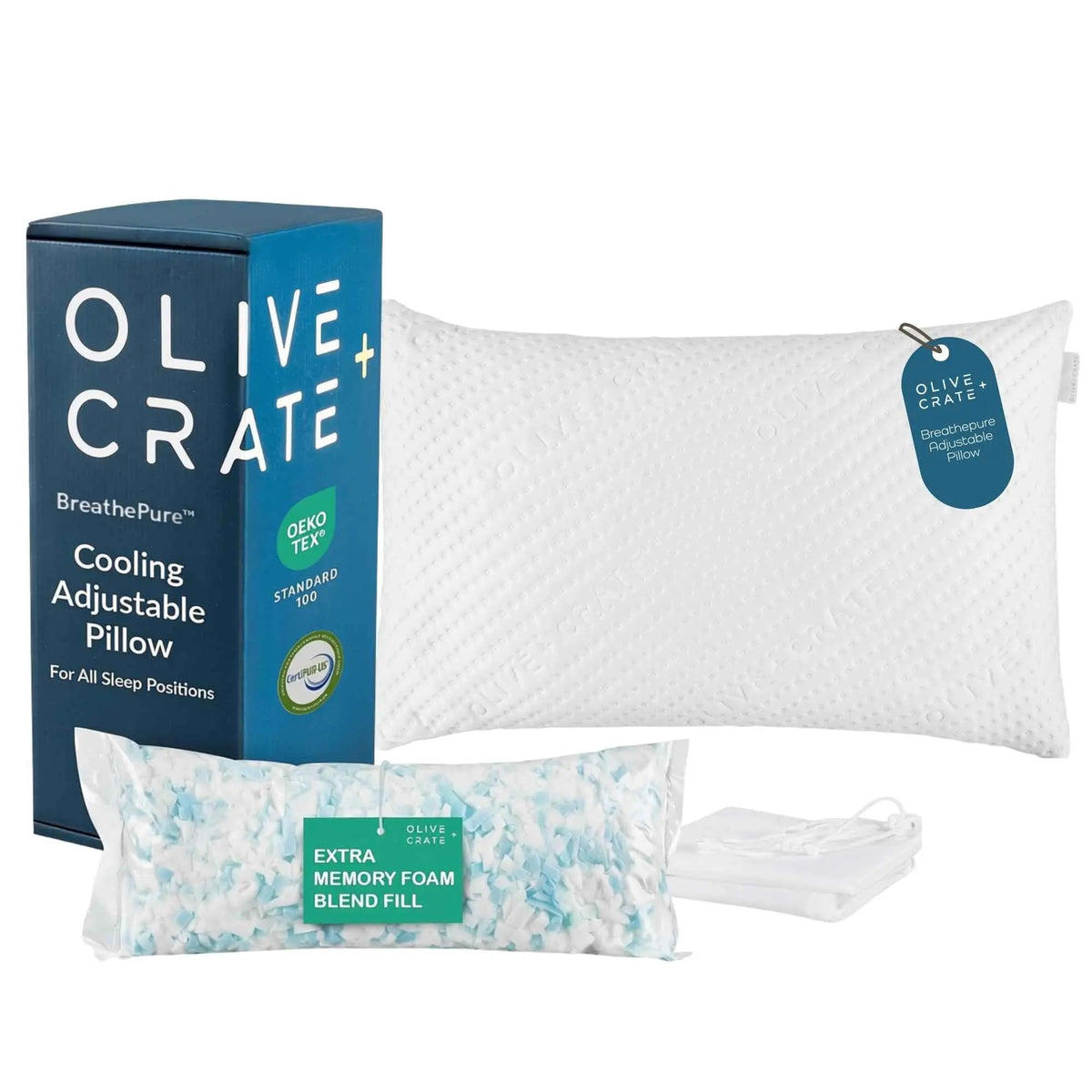
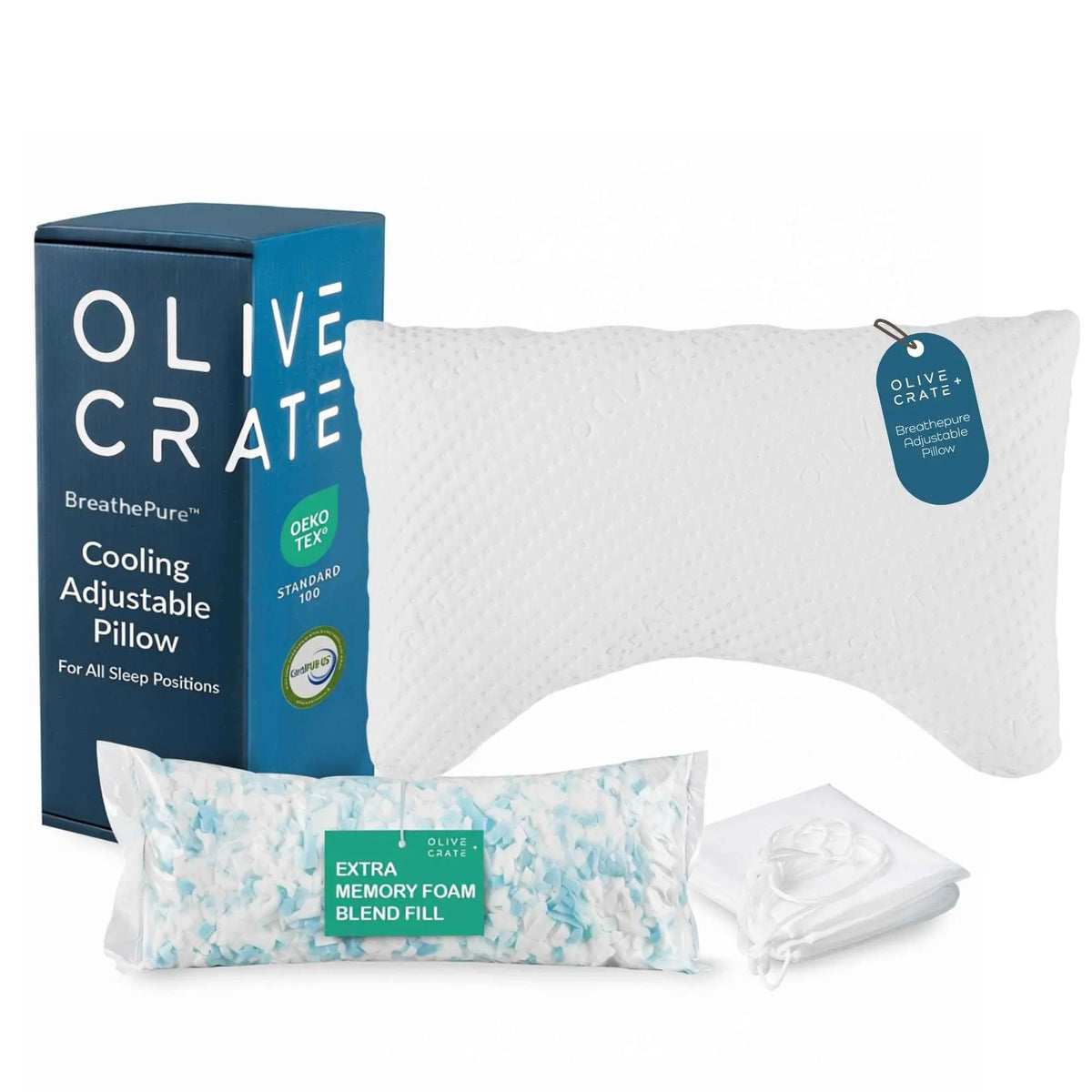
An adjustable pillow like the BreathePure Cooling Adjustable Pillow reflects this approach by allowing customization without locking the body into one setup.
Best Pillows for Specific Pain Areas
Some people feel discomfort in the same place each morning. Others notice it shift. Pillow choice can change depending on where the body tends to hold tension.
When Pain Shows Up in the Neck or Upper Back
When the neck lacks support, the upper back often compensates.
Pillows with gentle cervical shaping can help keep the head from tilting, which may ease tension through the shoulders and upper back.
Most suitable pillow types:
-
Cervical or contoured pillows
-
Memory foam pillows with neck support
-
Latex pillows that resist flattening
When the Lower Back Feels Stiff
Lower back discomfort often responds to subtle support rather than dramatic change.
For back sleepers, placing a pillow under the knees can reduce pressure by allowing the spine to rest in a more natural position.
This kind of support works best as a complement to overall alignment.
Most suitable pillow types:
-
Medium-loft head pillows paired with knee support
-
Pillows that maintain consistent height overnight
When Headaches Start in the Morning
Headaches that appear after waking are sometimes linked to overnight neck tension. A pillow that keeps the head level may help when posture plays a role.
Most suitable pillow types:
-
Memory foam pillows that keep the head level
-
Contoured or adjustable pillows that prevent neck tilt
How to Determine the Right Pillow for You
Choosing the right pillow starts with noticing how your body rests and what causes tension.
Notice your usual sleep position
Whether you start on your back, your side, or move between positions affects pillow height and shape needs.
Pay attention to where discomfort shows up
Neck, upper back, and lower back tension often point to different support requirements.
Assess your mattress firmness
A firmer mattress may call for a slightly higher pillow. A softer mattress often works better with a lower one.
Check how you feel after hours of sleep
If you wake up stiff or sore in the same places, the pillow may not be working with your body.
Match loft to your body and sleep needs
Too high or too low can disturb spinal alignment. Small adjustments often feel more natural over time.
Final Takeaway
Choosing the best pillow for back pain is just paying attention to how your body rests, where it holds tension, and how small changes feel over time all matter.
Comfort often comes from thoughtful adjustment rather than a single perfect choice.
Sources & Medical References
Sleep Foundation. Best Pillow for Back Pain.
https://www.sleepfoundation.org/best-pillows/best-pillow-for-back-pain
Mayo Clinic. Sleeping Positions for Back Pain.
https://www.mayoclinic.org/diseases-conditions/back-pain/in-depth/sleeping-positions/art-20546852
ChiroUp. Choosing the Best Pillows: Tips Chiropractors Commonly Share.
https://chiroup.com/blog/choosing-the-best-pillows-7-tips-every-chiropractor-should-know
The Spine and Rehab Group. What Causes Lower Back Pain After Sleeping.
https://www.thespineandrehabgroup.com/what-causes-lower-back-pain-after-sleeping
Harvard Health Publishing. What Type of Mattress Is Best for People With Low Back Pain.
https://www.health.harvard.edu/pain/what-type-of-mattress-is-best-for-people-with-low-back-pain
Keck Medicine of USC. The Best and Worst Sleep Positions for Back Pain.
https://www.keckmedicine.org/blog/the-best-and-worst-sleep-positions-for-back-pain/
Ohio State University Wexner Medical Center. How to Choose a Pillow.
https://health.osu.edu/health/general-health/how-to-choose-a-pillow