
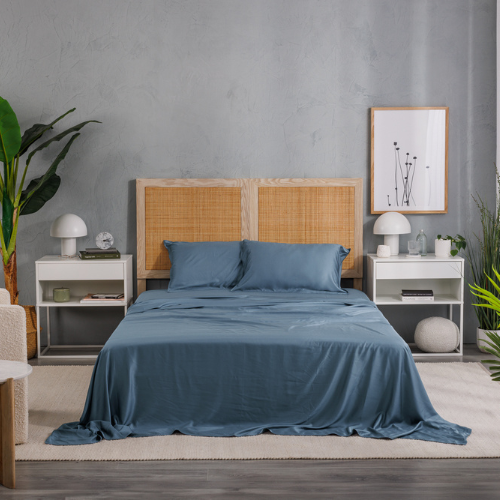

Bed sheets can feel very different depending on the material, weave, and how they’re made.
Understanding the different types of bed sheets makes it easier to compare options and choose what works for you.
Common Types of Bed Sheets by Material
1. Cotton Sheets
Cotton sits in the middle of most comparisons because it balances airflow, structure, and softness without leaning too far in one direction.
It’s often the most familiar option, but that familiarity comes from consistency rather than standout features.
Temperature:
Moderate. Cotton doesn’t feel overly cool or warm, which makes it adaptable across seasons.
Breathability:
Allows steady airflow without feeling too open. It helps release heat gradually rather than all at once.
Texture:
Varies depending on weave. Percale feels crisp and dry, while sateen feels smoother and slightly denser.
Drape:
More structured than fluid. It stays in place rather than clinging to the body.
Weight:
Medium weight. Feels balanced rather than light or heavy.
Over time:
Softens gradually with washing while maintaining its overall structure.
Cotton tends to feel better after a few uses. It doesn’t rely on first impressions, which is why many people return to it.
2. Linen Sheets
Linen takes a different approach. Instead of softness, it focuses on airflow and separation.
The fibers are thicker and the weave is looser, which creates small gaps between the fabric and your skin. That space is what gives linen its distinct feel.
Temperature:
Naturally cool, especially in warmer environments.
Breathability:
Very high. Air moves freely, which prevents heat from building up.
Texture:
Textured and slightly coarse at first, with a noticeable surface.
Drape:
Sits away from the body rather than following its shape.
Weight:
Feels light but slightly substantial at the same time.
Over time:
Softens with washing but keeps its texture and character.
Linen doesn’t try to feel smooth. It works by reducing contact and allowing airflow to do the work.
3. Bamboo Sheets
Bamboo fabrics shift toward softness and drape. They feel noticeably smoother from the first night.
The fibers are processed into a more uniform structure, which changes how the fabric moves and rests on the body.
Temperature:
Cool and stable, without sharp shifts.
Breathability:
Good airflow, though less open than linen.
Texture:
Smooth with a slightly silky feel.
Drape:
Falls closer to the body and follows movement.
Weight:
Slightly heavier in feel than it appears.
Over time:
Remains consistent, with less change compared to cotton or linen.
Bamboo feels finished from the start. It doesn’t need time to soften, but it also doesn’t evolve as much.
4. Eucalyptus (Tencel) Sheets
Eucalyptus-based fabrics are often grouped together, but not all are the same.
Tencel is a specific type of eucalyptus fiber, processed in a more controlled way, which affects how it feels and performs.
Temperature:
Cool, with a more “dry” feel rather than a silky one.
Breathability:
High, with efficient moisture movement.
Texture:
Very smooth with low friction.
Drape:
Fluid but lighter than bamboo.
Weight:
Lightweight and airy.
Over time:
Maintains its feel with minimal change.
Eucalyptus tends to feel less dense than bamboo and less structured than cotton, which makes it feel lighter through the night.
5. Silk Sheets
Silk behaves differently from most other materials. It’s less about airflow and more about how it reacts to your body.
It adjusts quickly to temperature and moves easily, which creates a very fluid experience.
Temperature:
Responsive. Feels cool or warm depending on your body.
Breathability:
Moderate, but doesn’t absorb moisture the same way as other fabrics.
Texture:
Extremely smooth with almost no friction.
Drape:
Flows closely and continuously with movement.
Weight:
Very lightweight.
Over time:
Maintains its feel but requires careful care.
Silk doesn’t feel stable in the same way as cotton or linen. It feels reactive and constantly adjusting.
6. Satin Sheets
Satin is defined by its weave rather than its fiber. It can be made from synthetic or natural materials, but the surface finish is what stands out.
The weave creates a flat, reflective surface that changes how the fabric interacts with heat and movement.
Temperature:
Tends to feel warmer due to reduced airflow.
Breathability:
Lower than more open weaves like percale or linen.
Texture:
Glossy, slick surface.
Drape:
Glides easily across the skin rather than staying in place.
Weight:
Light to medium depending on the base fiber.
Over time:
Maintains its smoothness but doesn’t change much.
Satin feels sleek and polished, but it prioritizes surface feel over airflow.
7. Microfiber Sheets
Microfiber is a synthetic material made from very fine polyester fibers. It’s often chosen for its softness and ease of care rather than airflow.
Temperature
Tends to feel warmer over time.
Breathability
Lower than natural fibers.
Texture
Soft and uniform.
Drape
Sits close to the body.
Weight
Lightweight.
Over time
Maintains softness but can feel less fresh.
Microfiber feels smooth at first touch, but it behaves differently from natural materials after a full night of use.

Natural vs Synthetic Bed Sheets
Material type also falls into two broader categories: natural and synthetic.
Natural Materials
These include:
-
Cotton
-
Linen
-
Bamboo
-
Eucalyptus
-
Silk
They tend to allow airflow and respond more naturally to temperature and moisture.
What they feel like:
-
More breathable
-
More varied in texture
-
More responsive over time
Synthetic Materials
These include:
-
Polyester
-
Microfiber
-
Nylon blends
They’re engineered for softness and durability.
What they feel like:
-
Smooth and uniform
-
Soft at first touch
Looking more closely at whether polyester bedding is a good choice for everyday comfort helps explain these trade-offs.
A more in-depth comparison of polyester and microfiber versus natural bedding shows how airflow and comfort shift.
Sheet Weaves
Percale, sateen, and microfiber
Weave controls how tightly threads are arranged, which directly affects airflow, texture, and temperature.
Percale:
-
One-over-one weave
-
Feels crisp, dry, and breathable
-
Air moves easily through the fabric
Sateen:
-
Tighter weave with more surface thread exposure
-
Feels smoother and slightly heavier
-
Retains more warmth
Microfiber:
-
Made from very fine synthetic fibers
-
Feels soft but more closed off
-
Limits airflow compared to natural weaves
The difference becomes more noticeable after a few hours of use. Percale stays cool. Sateen feels smoother but warmer.
Thread count alone doesn’t explain this. Understanding what a good thread count actually means in practice helps shift focus toward construction.
Bed Sheet Types by Function

Flat vs Fitted Sheets
Fitted sheets go over the mattress and stay in place. They create a smooth, stable surface and affect how the bed feels underneath you. If the fit is off, you’ll notice shifting or bunching.
Flat sheets sit between you and your duvet or blanket. They add a layer you can adjust depending on temperature or preference.
Deep Pocket Sheets
Deep pocket sheets are fitted sheets made for taller mattresses.
They have extra depth in the corners, so they wrap fully around thicker mattresses or those with toppers.
How They Work Together
-
Fitted sheets create the base
-
Deep pockets ensure the fit is right
-
Flat sheets add flexibility on top
Small habits shape how your bed feels over time. Even something like learning how to fold a fitted sheet neatly and without frustration can make the process feel easier.
Sheet Material Comparisons
Comparing materials side by side helps clarify where each one works best.
Bamboo vs Eucalyptus vs Cotton
These three are often compared because they sit close together but behave differently over time.
-
Bamboo holds slightly more weight and drapes closer to the body
-
Eucalyptus feels lighter and manages moisture more efficiently
-
Cotton sits in between, with more structure and flexibility depending on weave
Best for:
-
Bamboo → softness and a closer, more cushioned feel
-
Eucalyptus → staying cool and dry
-
Cotton → balance and long-term reliability
A closer look at bamboo, cotton, and eucalyptus sheets in everyday use shows how these differences become more noticeable over time.
Bamboo vs Linen
These two differ more in structure than softness.
-
Bamboo follows movement and stays close to the body
-
Linen allows more airflow and sits away from the skin
Best for:
-
Bamboo → smoother feel and less texture
-
Linen → airflow and a more breathable sleep environment
Eucalyptus vs Linen
This comparison comes down to airflow vs surface smoothness.
-
Eucalyptus focuses on moisture control and consistency
-
Linen focuses on ventilation and separation
Best for:
-
Eucalyptus → stable temperature and smoother surface
-
Linen → maximum airflow and a lighter overall feel
Temperature regulation plays a role here. This is where cooling sheets help regulate your body temperature naturally.
Microfiber vs Cotton
This is one of the most practical comparisons.
-
Microfiber is more uniform and lower maintenance
-
Cotton is more breathable and adaptable
Best for:
-
Microfiber → easy care and initial softness
-
Cotton → airflow and long-term comfort
Satin vs Microfiber
These differ more in surface behavior than material performance.
-
Satin reduces friction and feels smoother
-
Microfiber feels more stable and less slippery
Best for:
-
Satin → reducing friction (skin, hair)
-
Microfiber → a more grounded, less shifting feel
Rayon vs Cotton
These sit closer together but differ in structure.
-
Rayon is more fluid and lightweight
-
Cotton is more structured and durable
Best for:
-
Rayon → softness and drape
-
Cotton → consistency and everyday use
Over time, these differences matter more than first impressions. That’s where what makes the best sheets to sleep on long term becomes clearer.
Hypoallergenic vs Antimicrobial Sheets
Some sheets affect how fresh the bed feels and how your skin responds over time.
Hypoallergenic sheets focus on reducing irritation. They’re made from materials that are less likely to trap dust or allergens, which can feel gentler on sensitive skin.
Antimicrobial sheets focus on controlling buildup. They help limit bacteria and odor, so the fabric stays fresher between washes.
The difference is simple:
-
Hypoallergenic → reduces irritation
-
Antimicrobial → helps prevent buildup
It’s a subtle difference, but one you tend to notice after a few nights.
Understanding the difference between hypoallergenic and antimicrobial bedding helps clarify what actually changes with each.
Best Sheets for Your Sleep Style
Based on how you sleep
Your habits shape what feels right.
-
Warm sleepers → breathable fabrics
-
Cooler sleepers → denser materials
-
Sensitive skin → smoother surfaces
If heat tends to build up through the night, best sheets for hot sleepers and how they stay cool can help narrow things down.
How Sheets Change Over Time
Wear, washing, and feel
Sheets evolve with use.
-
Fibers soften or weaken
-
Texture becomes less defined
-
Structure loosens
Knowing how often you should replace your sheets based on real use helps maintain that familiar feel.
Conclusion
Different types of bed sheets don’t just feel different at first touch. They settle differently over the course of a night.
Some stay cool, others soften, and some hold their shape. The differences become clearer with use.
Once you notice how sheets actually behave, the choice becomes simpler. It’s less about labels and more about what feels right to you.