

What Is Polyester and Why Is It So Common in Bedding?
Polyester is a man-made fiber and, according to the Materials Market Report, the most widely produced fiber worldwide. In 2025, it accounted for 59% of all fiber production. This popularity is not an accident, though.
Polyester has a combination of qualities that make it useful across everything from clothing to home textiles, like bedding. Polyester is used so widely because it offers:
- Low cost compared to many natural fibers
- Strong fibers that hold up to frequent washing
- Resistance to wrinkling and shrinking
- Fast drying time
- Easy blending with cotton
And while polyester feels like a recent material, its history actually goes back to the 1920s.
W.H Carothers, a chemist at DuPont, laid the groundwork for polyester. He discovered that combining acids and alcohols derived from petroleum could produce synthetic fibers. However, he moved on to another synthetic fiber (nylon).
20 years later, polyester reemerged when a group of British chemists at the Calico Printer’s Association in Manchester picked up where Carothers left off. Their work led to the first polyester fabric, which they actually patented in 1941 under the name ‘Terylene.’ Dupont later purchased the rights and introduced its own version, Dacron® in 1951.
So, what is polyester made from? Most of it is made using virgin fossil-based feedstocks (crude oil and natural gas). But some are shifting away from these sources and using recycled materials instead, particularly old plastic bottles. There are also emerging materials like bio-based and CO2-based feedstocks.
Fun Fact: Polyester is actually a mash-up of two words: poly, meaning “many,” and ester, a chemical compound formed when an acid reacts with alcohol.
Why Can Polyester Sheets Be Bad?
The pushback on polyester sheets usually comes down to comfort. Not everyone notices it immediately, but the same issues tend to show up again and again.
Traps Heat and Is Not Breathable
Polyester can feel warmer and less breathable than fabrics such as cotton or linen because of how its fibers handle air and heat. As mentioned earlier, polyester is synthetic. Its fibers have a relatively smooth, compact structure, so the fabric doesn't naturally allow as much air movement through it.
When there is less air movement through the fabric, warm air can stay closer to your skin instead of being carried away. The result is a fabric that can feel hotter, particularly when you're already sweating.
Another thing to know is that polyester is lipophilic, meaning it attracts and holds onto oils from your sweat. Those compounds can then provide a food source for odor-causing bacteria, which is one reason polyester can develop a noticeable smell.
Does Not Absorb Moisture
Polyester does not absorb moisture the way many natural fibers do. This comes down to the fibers' chemistry.
Natural fibers such as cotton and wool have hydrophilic chemical groups (attracted to water). Cotton, for example, has hydroxyl groups that can form hydrogen bonds with water, allowing moisture to enter and be held within the fiber. Polyester does not have these, so water does not readily bond to the fiber.
You can also blame the physical structure. With polyester, the molecular chains are packed closely together, and the fiber has a relatively smooth, non-porous structure. As a matter of fact, polyester’s moisture absorption rate is only about 0.4% to 1% by weight, while natural fibers like cotton can absorb up to 7% or more.
What does this mean for you? The moisture from sweat tends to remain closer to the surface of the fabric rather than being absorbed deep into the fibers.
Can Irritate the Skin
Polyester isn’t automatically bad for your skin. Plenty of people sleep on it without any problems.
The problem can start when you’re wearing it for hours, and your skin has nowhere to get rid of the heat and moisture. Again, sweat stays close to your body, the fabric can feel warmer, and all that trapped moisture gives bacteria a better environment to build up. For sensitive skin, that combination can leave you more prone to rashes, clogged pores, or even chafing.
But that doesn’t always necessarily mean the polyester fiber itself is irritating you. Sometimes, the problem is what’s been added to the fabric during manufacturing, such as certain disperse dyes or chemical finishes. And, yes, a genuine allergy is possible, too. Polyester allergy, a type of contact dermatitis, can also happen.
Tip: If eczema is part of your life, bedding can influence how calm your skin feels by morning. Our guide to sheets for eczema breaks down which materials tend to feel gentler and why.
Can Contain Harmful Chemicals
Polyester can contain chemicals that may harm you or the environment. These can include certain dyes, flame retardants, water-repellent finishes, and other additives used during manufacturing. Some of these chemicals can remain in the finished fabric or be released into the environment during washing and disposal.
Not Biodegradable
Lastly, polyester fabrics are not biodegradable. Their petroleum-based chemistry and tightly bonded polymer structure make them difficult for microorganisms to break down. Instead of decomposing like natural fibers, polyester can persist in the environment for decades or even centuries. This also means polyester textiles can remain in landfills for a very long time after they’re thrown away, rather than returning to the natural carbon cycle.
What Are the Best Alternatives to Polyester Sheets?
If polyester sheets feel warm or slightly uncomfortable, consider alternatives like TENCEL™, cotton, and linen.
Tip: Can’t decide which bedding fabric to get? Read our how to choose good sheets guide.
Cotton
For a cool, breathable feel, cotton has a clear advantage over polyester. Its fibers absorb sweat rather than pushing moisture away from the skin, which can be comfortable, especially during warm weather. The downside is that damp cotton takes longer to dry, and the fabric is more likely to shrink or wrinkle with washing.
Cotton is known for:
- Breathability
- Moisture absorption
- Easy care
- Biodegradable fibers
Linen
Few fabrics are as naturally airy as linen. Its loose weave encourages airflow, while the fibers absorb moisture and release it relatively quickly. However, keep in mind that linen does wrinkle easily and may feel slightly crisp when new, but it softens with use and gives clothing and bedding a relaxed lightweight feel.
Linen is known for:
- Excellent airflow
- Moisture absorption
- Quick drying
- Lightweight feel
- Natural texture
Eucalyptus TENCEL™
Eucalyptus-derived fibers, commonly known as TENCEL™, are designed differently from synthetic polymers. They tend to absorb moisture rather than simply move it across the surface. That shift alone changes how sheets feel through the night.
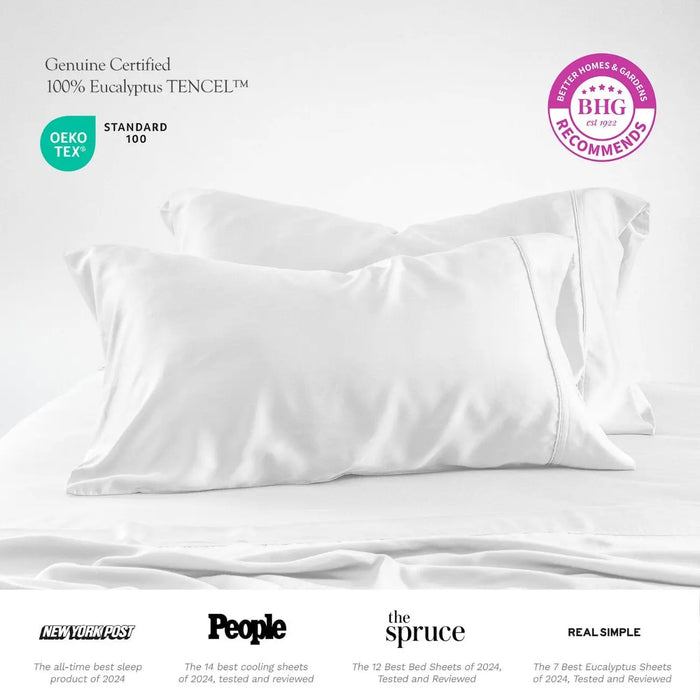
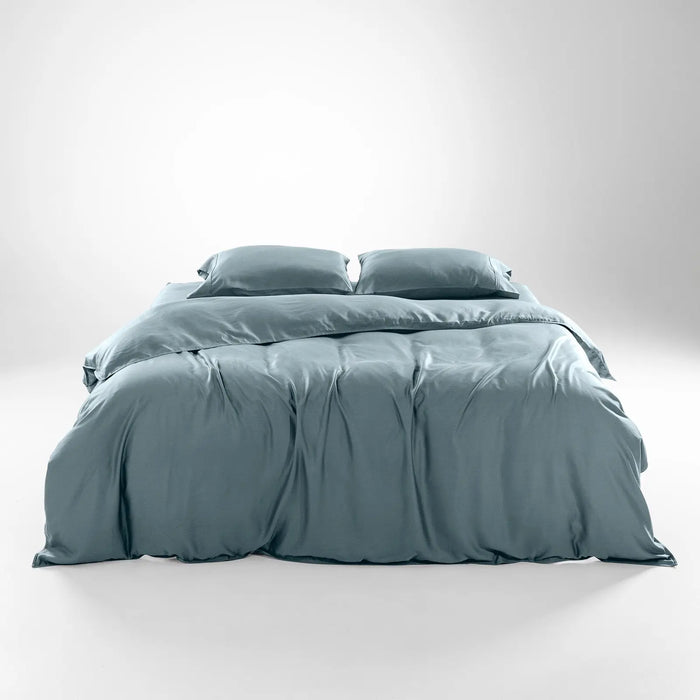
Eucalyptus sheets are known for:
- Breathability
- Effective moisture absorption
- Smooth fiber structure
- Reduced friction
- Renewable raw material sourcing
Bamboo
With bamboo-derived fabrics, you get an exceptionally smooth, soft feel, plus good breathability and moisture management that keep them comfortable against the skin. However, they do require more care than polyester, particularly when exposed to high heat, but the trade-off is a softer, less synthetic-feeling fabric.
Tip: Should you get bamboo or eucalyptus? Our breakdown of bamboo vs eucalyptus sheets can help you make the right choice.
Bamboo is known for:
- Smooth, soft feel
- Breathability
- Moisture management
- Gentle next-to-skin feel
Common Questions About Polyester