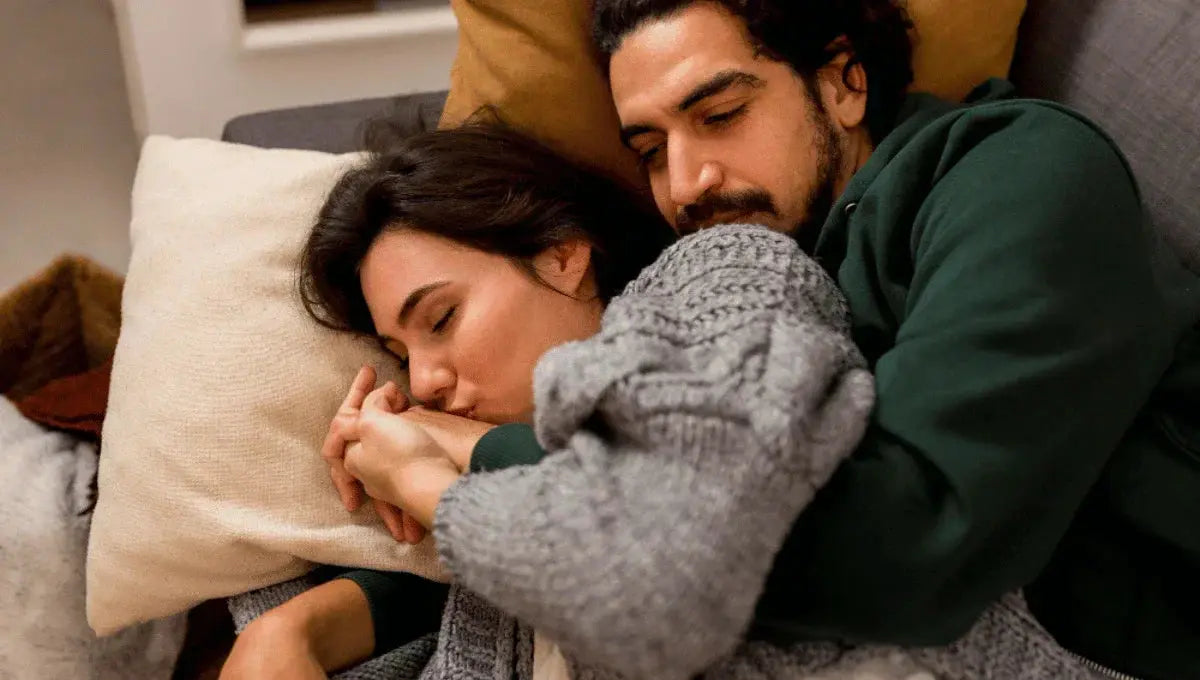


Sleeping next to someone else changes how you rest. Two people rarely move the same way, regulate temperature the same way, or fall asleep at the same pace.
Couple sleeping positions usually develop out of comfort, not symbolism. The arrangement that lasts is the one both bodies can maintain without strain.
Gentle note: This article is for informational purposes only and does not replace medical advice.
5 Best Sleeping Position for Couples (and by scenario)
The best sleeping positions for couples are usually the ones that allow airflow, movement, and alignment rather than full-body entanglement.
Here are five positions that couples commonly return to.
1. Side by side, facing the same direction

This is one of the most comfortable sleeping positions for couples, especially for side sleepers. Both partners lie parallel, with enough room to adjust without waking the other.
Each person has their own pillow height and space for their shoulders and hips to settle comfortably.
This setup works especially well when both partners prefer similar firmness and sleep depth but still want proximity without full-body contact.
2. Back to back with light contact

Here, both partners lie on their sides facing away from each other, with their backs gently touching. The contact point is subtle, usually along the shoulder blades or hips.
Because the arms remain in a neutral position and the shoulders are not compressed, this arrangement often lasts through the night without adjustment.
3. Spooning

Spooning is one of the best known sleeping positions with a partner. It feels natural at the start of the night.
The rear partner’s arm may rest along the waist or lightly around the torso, without pulling tightly. Legs are bent naturally rather than wrapped tightly together.
A looser version of spooning allows for warmth and closeness without putting pressure on shoulders or restricting breathing.
4. Face to face, loosely

Face to face positions are often associated with romantic couple sleeping poses. They can feel intimate and calm before sleep deepens.
Both partners lie on their sides facing each other with relaxed posture. Their torsos are close, but not pressed tightly together.
Arms are soft and neutral, sometimes resting near the pillow or lightly touching at the forearm or waist.
It often works well at the beginning of the night before one or both partners shift positions.
5. The leg hug

The couple sleeping positions leg hug is simple and effective. One leg rests over the other person’s thigh or shin. The upper torso stays relatively free, which helps prevent overheating.
This position allows for contact without compressing shoulders or arms, making it a practical middle ground between space and closeness.
By scenario
-
If both partners run hot, back to back or side by side with space often works best.
-
If one person experiences shoulder discomfort, parallel side sleeping with pillow support usually feels more stable.
-
If one partner moves frequently, lighter contact positions reduce disturbances.
What Couples’ Sleeping Positions Can Mean
Most couples get curious about sleep posture when something shifts. You used to fall asleep touching. Now you don’t.
Or you always needed space, and suddenly you’re reaching for each other again.
Sleep posture is usually shaped by a mix of:
-
Temperature and airflow
-
Stress levels
-
Pain or pressure points (shoulders, hips, back)
-
Habit and routine
-
How lightly each person sleeps
What common patterns can suggest
-
Light touch often reflects ease. It can mean closeness feels settled, not fragile.
-
Full-body closeness can reflect affection, but it can also be about comfort, reassurance, or a cooler room.
-
More distance is often practical. Heat, soreness, or sensitivity to movement are common reasons.
-
Frequent shifting can reflect stress, light sleep, or a bed setup that is not working well for both people.
Research examining sleep proximity has found associations between physical closeness and lower reported stress. The link is real, but it is not a rule.
Positions also change with life circumstances. Illness, workload, travel, parenting, and even mattress type can influence where each person settles.
Most of the time, posture says more about the body than the relationship.
Best Cuddling Positions That Don’t Turn Into a Sweat Trap
Cuddling feels simple until the body starts to overheat.
The best cuddling positions are the ones that allow circulation and airflow.
Half spoon
This remains one of the best sleeping positions for couples who enjoy contact but need space to move. It reduces pressure and allows either partner to shift easily.
Leg hug
The leg hug stands out among comfortable couple sleeping positions because it limits surface contact while still maintaining connection.
Hand on the back
A hand resting lightly at the waist or upper back creates contact without restricting movement.
Ankle contact
A small point of contact at the feet can feel grounding without raising body temperature.
Touch does not need to last all night to matter. Even brief contact can shift the tone of the evening, which we explore in our article on the benefits of cuddling for sleep.
When Your Sleeping Styles Don’t Match
Even couples who love sleeping next to each other can have completely different sleep instincts.
These differences are common. They usually come down to temperature, pressure points, and how lightly each person sleeps.
Common mismatches that show up in real beds
-
Hot sleeper + cold sleeper
One person is comfortable under a light layer. The other wants weight and warmth. -
Still sleeper + active sleeper
One person barely moves. The other turns frequently and wakes their partner by accident. -
Sprawling sleeper + compact sleeper
One person takes up more space without meaning to. The other quietly adjusts all night. This is where the starfish position often shows up, along with a lot of misunderstandings. -
Touch-seeker + space-seeker
One person relaxes with contact. The other needs a little room to actually fall asleep.
Small changes that usually help
-
Separate blankets so neither person wakes up cold or annoyed
-
Different pillow heights so both necks and shoulders stay supported
-
A cooler room so closeness feels comfortable instead of claustrophobic
-
A consistent “start close, then shift” routine if one partner needs touch and the other needs space
It is easy to assume mismatched sleeping styles mean something bigger. Most of the time, it is simply two bodies trying to rest in the same space.
The Best Way to Sleep Together Without Waking Each Other Up?
A study on bed sharing shows that co-sleeping can both support and disrupt sleep depending on sensitivity to motion and sound.
Positions that allow independent movement tend to reduce disturbances. Blanket arrangements that prevent tugging help as well.
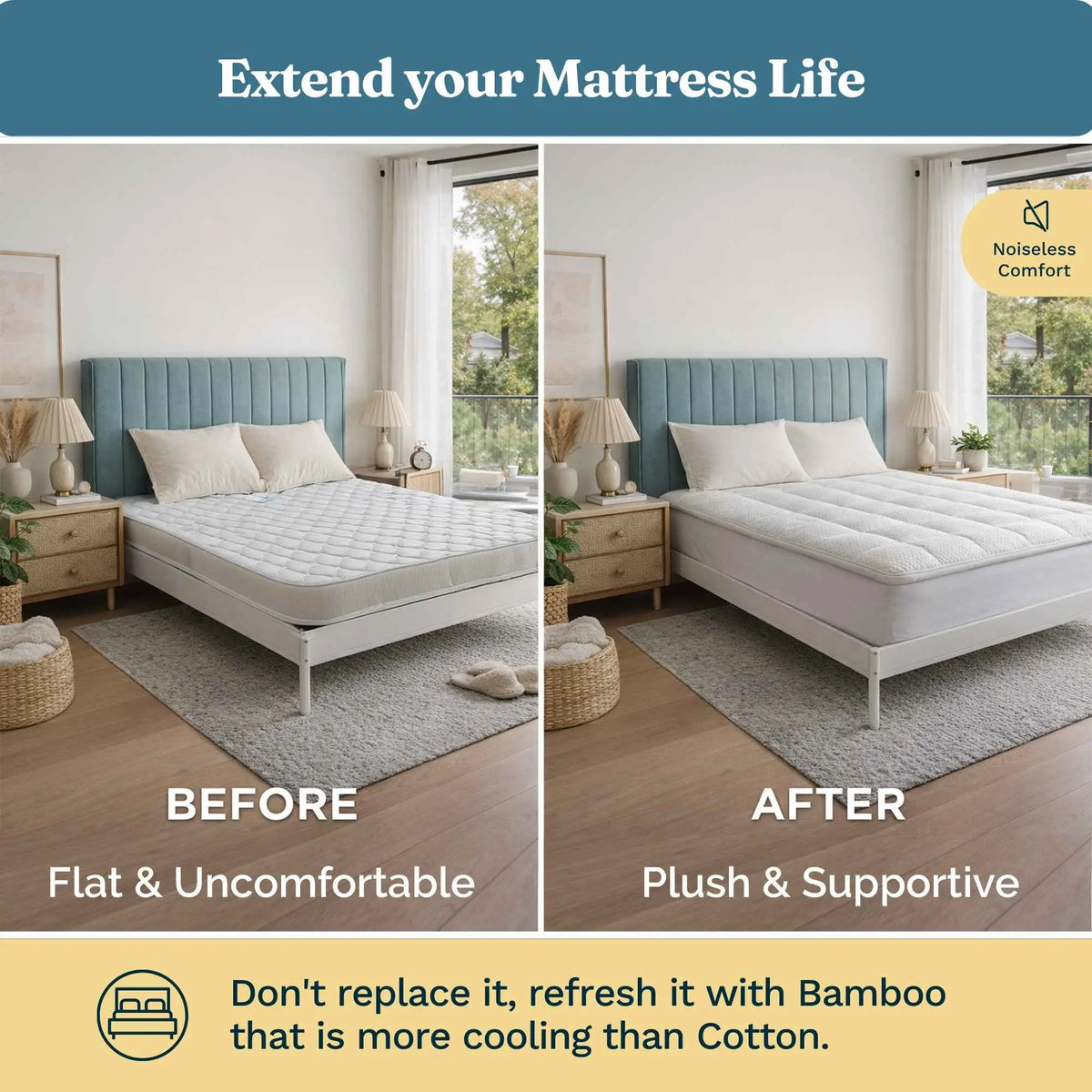
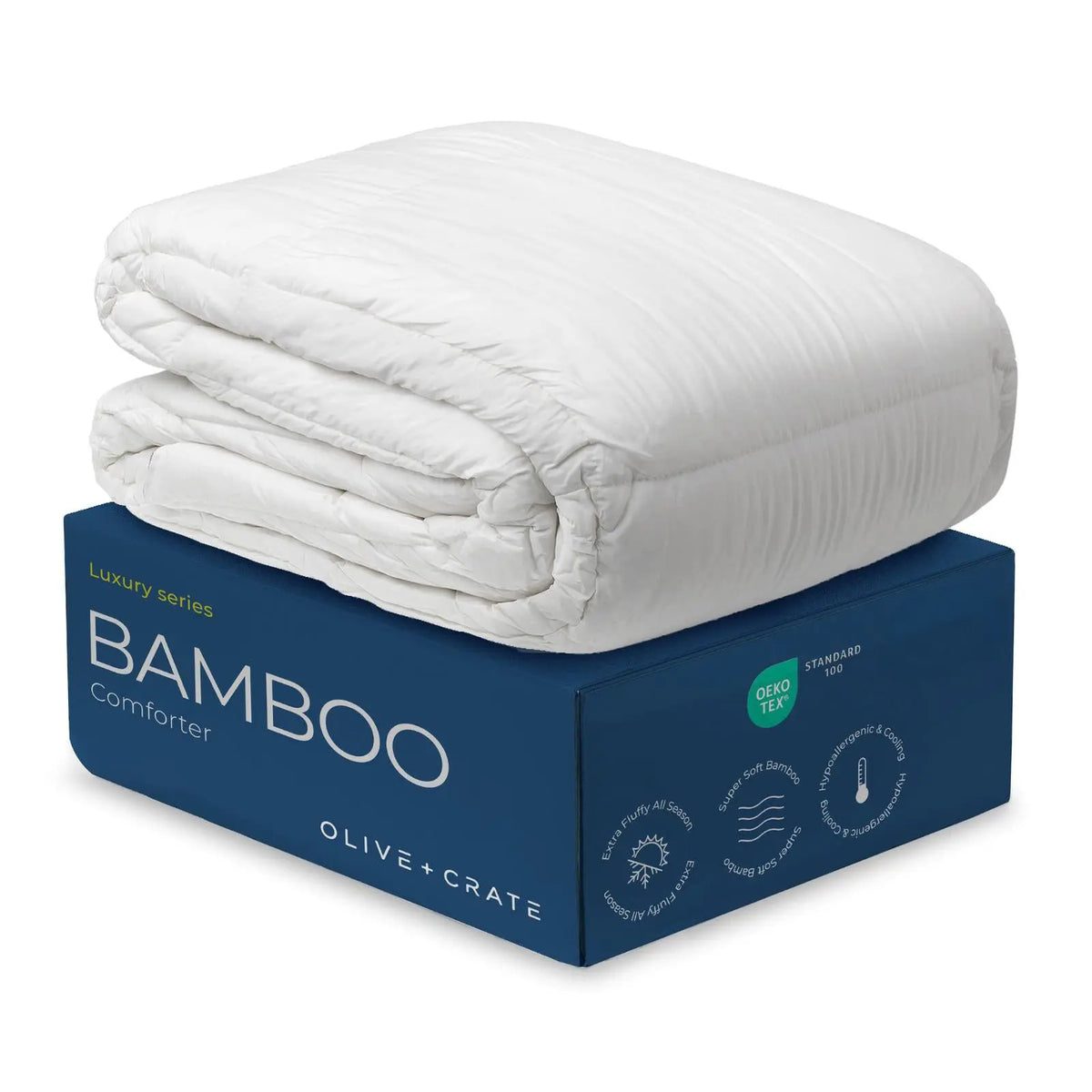
Temperature also plays a larger role than most people expect. When a comforter holds too much warmth, partners tend to separate without thinking about it.
Lighter, more breathable fills make it easier to maintain closer positions. Options like the bamboo comforter are often chosen for that reason, especially by couples who sleep warm.
The goal is not to force closeness. It is to remove the small irritations that interrupt it.
When Sleep Position Is Actually About Stress
Couple sleeping positions and what they mean sometimes reflect stress levels more than relationship dynamics. A person under pressure may shift more often, wake more easily, or prefer extra space simply to feel physically settled.
Neuroscience research has shown that supportive presence can influence how the brain processes discomfort and perceived threat. The nervous system responds to context.
Feeling safe can reduce reactivity, while stress can increase physical sensitivity.
That is why sleep posture can change during busy periods, illness, or emotional strain. Some people seek more contact when stressed. Others need more room to regulate.
Neither response automatically signals distance. Often, it signals adaptation.
Closing: What Works Is What Lasts
The best sleeping position for couples is the one that supports comfort on both sides of the bed. If that position changes over time, it usually reflects normal adjustments in sleep and routine.
Consistency in comfort matters more than sticking to one specific posture.
Sources & Medical References
Sleep Foundation. Couples and Sleeping Positions https://www.sleepfoundation.org/sleeping-positions/couples
ScienceDaily. Sleeping position and relationship satisfaction linked, study finds https://www.sciencedaily.com/releases/2014/04/140415203702.htm
National Library of Medicine (PMC). Co-Sleeping and Sleep Quality in Adult Couples: A Review of the Literature https://pmc.ncbi.nlm.nih.gov/articles/PMC3936960/
The Journal of Neuroscience. Social Support Reduces Neural Responses to Experimental Pain https://www.jneurosci.org/content/32/46/16074