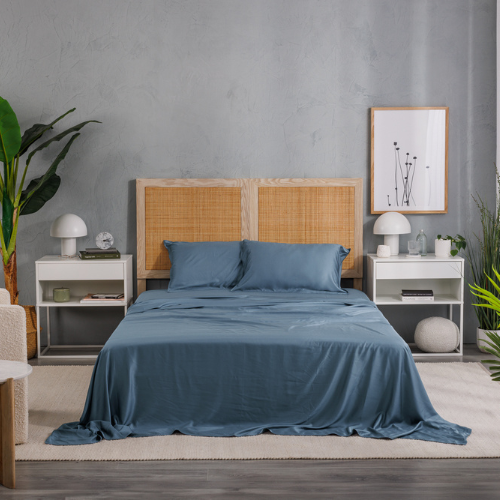

Some people find that sleeping without clothing helps them feel cooler, more comfortable, and less restless during the night.
Many of the benefits of sleeping naked come down to how well the body can release heat and settle into deeper sleep.
Gentle note: This article is for informational purposes only and does not replace medical advice.
Can Sleeping Naked Improve Sleep?
Body temperature and sleep cycles
Sleeping naked may help improve sleep by allowing the body to cool down more easily.
Before sleep begins, core body temperature naturally drops. This cooling signal helps the brain transition into rest.
Research examining sleep thermoregulation and heat release during rest
shows that skin temperature plays an important role in regulating sleep cycles and influencing how quickly the body moves into deeper sleep stages.
Further research exploring circadian temperature rhythms and sleep timing
also shows that gradual nighttime cooling supports more stable sleep patterns.
Sleeping without heavy layers can make it easier for the body to release heat, especially for people who tend to sleep warm.
The temperature range that supports better sleep
Most researchers suggest keeping the bedroom between 60 and 67°F (15–19°C).
Within that range, the body can release heat naturally and maintain stable sleep cycles throughout the night.
Why Some People Prefer Sleeping Naked
Heat buildup during the night
Clothing can trap warmth against the body. For people who run warm, this may lead to night sweats, restlessness, or repeated waking.
Persistent sweating is often tied to temperature imbalance during sleep.
Understanding common triggers behind night sweats and how they can be reduced helps explain why removing sleepwear sometimes improves comfort.
Fewer layers, fewer interruptions
Some people simply sleep more comfortably without clothing.
Without tight seams or waistbands, the body moves more freely and pressure points are reduced.
Common reasons people choose to sleep naked include:
-
less trapped body heat
-
fewer restrictive fabrics
-
easier movement during sleep
-
fewer sleep disruptions
Is it Healthy to Sleep Naked?
How airflow supports temperature balance
When air circulates freely across the skin, heat dissipates more effectively.
Skin temperature changes help the body maintain stable sleep cycles overnight. When airflow is restricted by heavy fabrics, the body may struggle to release heat.
Sleeping without clothing can allow that cooling process to happen more easily.
Bedding still matters
Even without sleepwear, bedding plays a major role in temperature balance. Heavy fabrics can trap warmth in the mattress and blankets.
Breathable materials help maintain airflow and moisture control during sleep.
Fabrics designed to improve ventilation help prevent heat buildup in the bed itself.
Benefits of Sleeping Naked for Men
Hormones and sleep quality
Testosterone production rises during deep sleep. Because of this, sleep quality plays a major role in hormone balance.
Studies examining sleep duration and testosterone levels show that disrupted sleep may reduce hormone production over time.
Additional research into sleep and metabolic hormone signaling also highlights the connection between sleep cycles and endocrine health.
Sleeping naked does not directly increase testosterone. However, a cooler sleep environment may help support more stable sleep.
Temperature and reproductive health
The male reproductive system relies on temperature regulation.
Testes remain outside the body because sperm production requires slightly cooler conditions than core body temperature.
Research on temperature and reproductive biology shows that prolonged heat exposure may affect sperm development. Reducing heat buildup overnight may help maintain more stable conditions.
For people who sleep hot, removing sleepwear can help reduce warmth around the body.
Benefits of Sleeping Naked for Women
For many women, the benefits of sleeping naked relate to airflow, comfort, and temperature balance.
Improved airflow and moisture balance
Tight clothing or synthetic fabrics can trap heat and moisture overnight. Allowing air to circulate around the body may help reduce moisture buildup in sensitive areas.
Health discussions around sleeping naked and nighttime comfort suggest that less restrictive sleepwear can improve airflow and reduce overheating.
Less irritation from restrictive fabrics
Sleepwear with tight waistbands, seams, or synthetic materials can sometimes create friction or pressure points.
Sleeping without restrictive fabrics allows the body to move more freely and may reduce irritation during the night.
Cooler sleep for deeper rest
The body naturally cools down before sleep. When clothing traps heat close to the skin, this process can be disrupted.
Sleeping without heavy layers may help the body release heat more easily, supporting more stable sleep throughout the night.
Can Sleeping Naked Help With Weight or Metabolism?
Some researchers have explored whether cooler sleeping environments influence metabolism.
One area of interest involves brown fat, a type of fat tissue that generates heat by burning energy. It suggests that cooler conditions may activate this process.
Additional research investigating temperature-related metabolic responses explores how mild cold exposure may influence energy balance.
That said, sleeping naked alone is unlikely to cause weight loss. Metabolism is shaped by many factors including diet, physical activity, and overall sleep quality.
How to Sleep Naked Comfortably
Sleeping naked usually works best when the room stays cool. The body needs to release heat during the night, and the sleep environment plays a big role in that.
A few simple adjustments can help:
-
keep the bedroom cool
-
remove heavy blankets
-
use breathable sheets
Bedding matters more than many people realize. Thick fabrics trap heat in the bed. Breathable materials allow air to move and moisture to escape.
Many hot sleepers notice better comfort after switching to cooling sheets.
Lowering body temperature before bed can also help. Even a small drop signals the body that it is time to sleep.
Some people find that taking a cool shower before bed helps them relax once they get into bed.
Other small habits can help keep the body cool:
-
avoid very hot showers before sleep
-
keep air moving in the room
-
choose lighter bedding materials
Sleeping Naked and Relationships
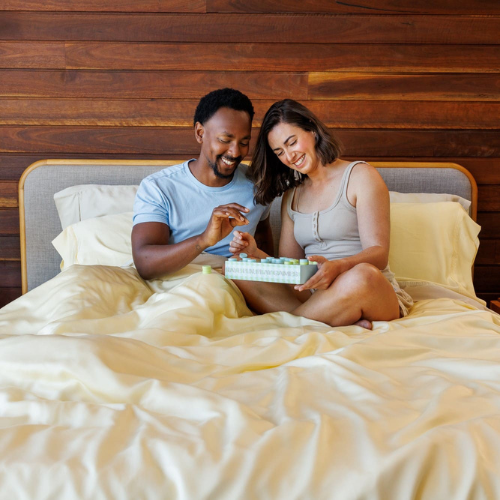
Skin contact between partners can influence relaxation and emotional connection.
When people sleep without layers between them, skin-to-skin contact becomes more likely. This contact may trigger the release of oxytocin, a hormone linked to relaxation and bonding.
It has been studied how cuddling with a partner can support relaxation and better sleep by contributing to a calmer sleep environment.
Is Sleeping Naked Always the Best Option?
Sleeping naked does not work for everyone. Personal comfort, climate, and living arrangements all influence nighttime habits.
Situations where sleepwear may make more sense include:
-
colder environments
-
shared living spaces
-
personal comfort preferences
If sleep still feels restless, clothing may not be the main issue.
Room temperature, bedding materials, and evening habits all affect sleep comfort.
Many people discover that their discomfort is connected to issues discussed in reasons people struggle to get comfortable in bed at night.
The Bottom Line
Sleeping naked is not a universal solution for better sleep. For some people, however, it creates a cooler and less restrictive sleep environment.
The real benefit often comes from supporting the body’s natural cooling process. When the room is comfortable, bedding is breathable, and the body can release heat easily, sleep tends to feel more stable and restorative.
External Sources for Further Reading
Core Body Temperature Changes Prior to Sleep Are Associated with Sleep Onset and Autonomic Activity
https://journals.physiology.org/doi/full/10.1152/japplphysiol.00020.2023
Circadian Rhythm of Core Body Temperature and Sleep Regulation
https://pmc.ncbi.nlm.nih.gov/articles/PMC3955336/
Sleeping Naked: Benefits and Considerations
https://www.sleepfoundation.org/sleep-hygiene/sleeping-naked
Sleep Thermoregulation: How Body Temperature Affects Sleep
https://drkumardiscovery.com/posts/sleep-thermoregulation/
Effect of Sleep Duration on Testosterone Levels in Healthy Men
https://pmc.ncbi.nlm.nih.gov/articles/PMC4445839/
Sleep, Metabolism, and Endocrine Signaling
https://febs.onlinelibrary.wiley.com/doi/10.1111/febs.16109
Temperature Effects on Reproductive Biology and Sperm Production
https://www.nature.com/articles/s44323-025-00024-6
Health Effects and Considerations of Sleeping Naked
https://www.verywellhealth.com/sleeping-naked-8601032
Temperature Exposure and Brown Fat Metabolism
https://www.sciencedirect.com/science/article/pii/S2666379121002664
Metabolic Responses to Mild Cold Exposure
https://www.sciencedirect.com/science/article/pii/S2468867319301804