
Vegan and sustainable are not the same standard.
Vegan bed sheets are made without animal-derived fibers, coatings, or finishing agents, but that does not automatically make them lower impact.
Fiber choice, manufacturing method, and certifications are what determine whether bedding aligns with both values.
What Are Vegan Sheets Made Of?
Which Fibers Qualify as Vegan Sheets for Bed
A sheet counts as vegan when neither the fabric nor the finishing ingredients come from animals.
That includes many common bedding materials:
-
cotton
-
linen
-
hemp
-
eucalyptus lyocell
-
bamboo-derived lyocell
-
polyester
-
microfiber
It excludes fibers such as silk, wool, and cashmere because those come directly from animals.
Plant-based options are usually where people begin because they offer breathability and a more familiar bedding feel.
Synthetic fibers also qualify, though they often hold more heat and behave differently after repeated washing.
Vegan Vs Sustainable Bedding
Why Vegan Does Not Always Mean Eco-Friendly
A vegan sheet can still have a high environmental cost.
Microfiber is a clear example. It contains no animal material, yet it is petroleum-based and can release synthetic particles during washing.
Cotton sounds straightforward because it is plant-based, but conventional cotton production often uses heavy irrigation and chemical inputs.
Bamboo and eucalyptus also vary depending on how the pulp is turned into fiber.
If you want to look more closely at that side of the decision, sustainable bedding basics explain what usually matters beyond the fiber label.
When Eco-Friendly Bedding Is Not Fully Vegan
The reverse also happens.
A product may reduce environmental impact in some areas while still containing animal-derived material.
Organic wool and peace silk are often discussed this way because they lower certain impacts but still rely on animal fibers.
Which Claims Matter Most on Labels
Current vegan textile standards look at both raw materials and processing methods.
Some fabrics are softened or finished with additives that can include animal-derived ingredients such as lanolin or silk protein.
The most reliable products usually explain:
-
fiber source
-
finishing method
-
certification if available
What Is Vegan Silk Made Of?
What Vegan Silk Usually Means
Vegan silk is not a single material. It is usually a description of how a fabric feels.
The term is often used for bedding that has a smooth surface and light drape without using traditional silk.
What Is Vegan Silk Made Of in Bedding?
Most bedding sold as vegan silk uses regenerated cellulose fibers or smooth woven cotton.
Common examples include:
-
eucalyptus lyocell
-
bamboo lyocell
-
cotton sateen
TENCEL™ is one of the best-known eucalyptus-based lyocell fibers used in this category, which is why knowing what TENCEL™ fabric is helps when comparing plant-based alternatives.
Can Vegan Silk Bed Sheets Feel Like Silk?
They can come close, especially when the weave supports the fiber.
Lyocell drapes easily and usually feels smooth against the skin. A sateen weave changes the surface feel of cotton by making it softer and less matte.
Recent fiber innovation research has also focused on regenerated cellulose fibers because they combine softness with moisture control in home textiles.
Vegan Silk Bedding and Plant-Based Alternatives
Vegan Silk Sheet Set or Lyocell Option?
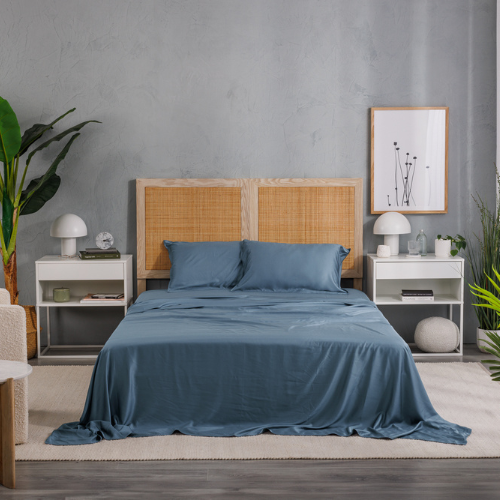
A vegan silk sheet set is usually chosen for the feel people expect from silk: smooth, light, and easy against the skin.
The difference is that plant-based options do not behave the same way once they are washed and used regularly.
Lyocell often comes closest because it keeps a smooth surface without feeling heavy.
Best Vegan Silk Sheets Beyond Marketing Claims
The clearest sign of quality is how the fabric holds up after repeated washing.
A strong vegan silk option should keep:
-
softness without becoming slippery
-
airflow through warm nights
-
moisture control without feeling damp
-
shape after laundering
When Vegan Silk Bedding Performs Best
The best option depends on how you sleep.
Eucalyptus lyocell usually feels cooler and lighter. Bamboo lyocell often has a slightly denser feel. Cotton sateen feels smoother than standard cotton but usually holds more warmth.
People who sleep warm often notice that eucalyptus sheet benefits have more to do with moisture release than softness alone.
Which Certifications Matter Most?
Why Fair Trade Bed Sheets Matter
A bedding label can tell you the fiber, but not much about the people behind it.
Fair Trade fills that gap by focusing on how products move through production, including labor conditions and supply chain standards.
OEKO-TEX vs GOTS in Simple Terms
OEKO-TEX and GOTS are often listed on the same product, but they are checking different things.
OEKO-TEX focuses on the finished fabric and whether unwanted substances remain after production. GOTS looks earlier in the process and follows how organic fibers are handled from raw material through manufacturing.
Seeing OEKO-TEX vs GOTS side by side makes that difference easier to read in practical terms.
Which Label Deserves More Trust?
It depends on what matters most to you.
If the priority is chemical testing, OEKO-TEX is usually the clearest reference point. If the goal is understanding how organic fibers were processed, GOTS gives more context. Fair Trade adds something different by looking beyond the fabric itself.
For finished textiles, OEKO-TEX bedding explains what is actually tested before a product reaches the shelf.
A recent textile sustainability study also points out that no single certification covers every stage equally, which is why labels are most useful when read together.
Best Eco Friendly Bed Sheets for Vegan Homes
Which Fibers Offer Lower Impact
If the goal is bedding that is both vegan and lower impact, the strongest options usually come down to cotton, bamboo, and eucalyptus.
Cotton is familiar but can require more water. Bamboo depends heavily on processing.
Eucalyptus-based lyocell is often chosen for lower water use and closed-loop production.
Best Eco Friendly Sheets for Daily Use
The right choice depends on what matters most in daily use.
Cotton is easy to care for and widely available. Bamboo is often chosen for softness. Eucalyptus usually feels cooler and releases moisture more quickly.
How Durability Changes Sustainability
A sheet that holds its shape and surface for years usually has less impact than one replaced often.
That makes durability part of the sustainability question, not separate from it.
Are Dryer Sheets Vegan Too?
Are Dryer Sheets Vegan by Default?
Not always.
Some dryer sheets use softening ingredients derived from animal fats.
Are Bounce Dryer Sheets Vegan?
This question comes up often because ingredient sourcing is rarely obvious on packaging.
Better Laundry Sheet Alternatives
To reduce buildup on bedding:
-
avoid heavy softeners
-
choose lighter formulas
-
check ingredient lists
When Product Construction Matters More Than Labels
Why Fiber Choice Changes Sleep Feel
Fiber affects airflow and softness, but weave changes how that fiber behaves night after night.
When Sheet Construction Affects Longevity
Two sheet sets made from the same material can age very differently depending on yarn quality and finishing.
What to Compare Before Buying
The most useful details to check are:
-
percale for a lighter feel
-
sateen for a smoother surface
-
GSM for weight
-
fiber quality for texture retention
A well-made TENCEL™ sheet set usually feels different from lower-grade lyocell because construction shapes how the fiber performs over time.
The best bedding choice usually becomes obvious once material, construction, and daily comfort are considered together.