

What Is Percale?
Percale features a simple one-over, one-under structure called a plain weave pattern. This grid-like weave pattern is what makes percale sheets crisp and lightly structured. And yes, this is also the reason why air moves through more easily.
Rayon, linen, or polyester can have a percale pattern, but you’ll often find this pattern on cotton, particularly long-staple cotton, because the fibers hold the pattern more securely, offer better durability and breathability, hold their shape well, and, most importantly, cotton moves heat away from your body.
With percale, a higher thread count doesn’t mean it is better. The ideal thread count for percale is around 200 to 400, so it remains breathable, crisp, and lightweight.
What Are the Pros and Cons of Percale?
The biggest advantage of the percale weave is its breathability. Its balanced, rigid construction allows more airflow between threads, so heat doesn't get trapped easily, and the fabric stays cooler against the skin. It also has moisture-wicking properties that draw sweat away from your body. So, if you are a hot sleeper, percale weave is perfect.
Percale's dense, tightly woven threads also make the fabric more resistant to fraying, pilling, and tearing. And yes, unlike other fabrics, it doesn't lose its shape or color. Plus, it doesn't require special care and maintenance. You just put it in the washer, use cold water and mild detergent, and tumble dry on low heat.
Percale weave has drawbacks, too. The one-over, one-under structure makes the fabric stiff out of the box. In order to “break” it in, it will need several washes. Other disadvantages? It easily wrinkles, and it doesn't have the fluid, graceful drape of fabrics like silk.
What Is Sateen?
Sateen, on the other hand, is woven differently, with more threads on the surface rather than evenly alternating. This gives the fabric a smoother, softer feel with a subtle sheen. A sateen weave also usually uses cotton, but you can also find this weave pattern in many fabric blends like rayon and polyester.
In terms of thread count, sateen usually comes in 300 to 600, contributing to its smooth surface and slightly denser feel.
What Are the Pros and Cons of Sateen?
Sateen weave’s construction gives the fabric its signature smooth, soft, silky feel. You also get a subtle sheen and a more fluid, relaxed drape than with percale. However, the same construction that gives sateen its desirable characteristics also contributes to its drawbacks.
As mentioned earlier, sateen uses a longer float structure. While this creates a smoother, softer surface, it comes at the expense of durability and breathability. Since more fiber surface is exposed, it is more susceptible to snagging and abrasion, and over time, the wear would be more visible. Plus, it has moderate breathability.
What Are the Differences Between Percale and Sateen Weave?
The main differences between percale and sateen weaves boil down to structure, feel, finish, breathability, weight, and who they are best for.
Weave Structure
The core difference that drives the differences in breathability, weight, finish, and feel between percale and sateen is their weave structure. With percale, one thread crosses over the next, then under the next. This structure makes every thread more rigid. With sateen, as mentioned earlier, the thread floats over three or four others before it finally dips under one, so most of the surface ends up being thread flying flat rather than locked in place.
Feel
Percale’s one-over, one-under structure locks the fabric into a tight grid, giving it a clean, crisp, cool feel from the moment you touch it. And, yes, it doesn’t cling; it rests lightly and lets air move freely.
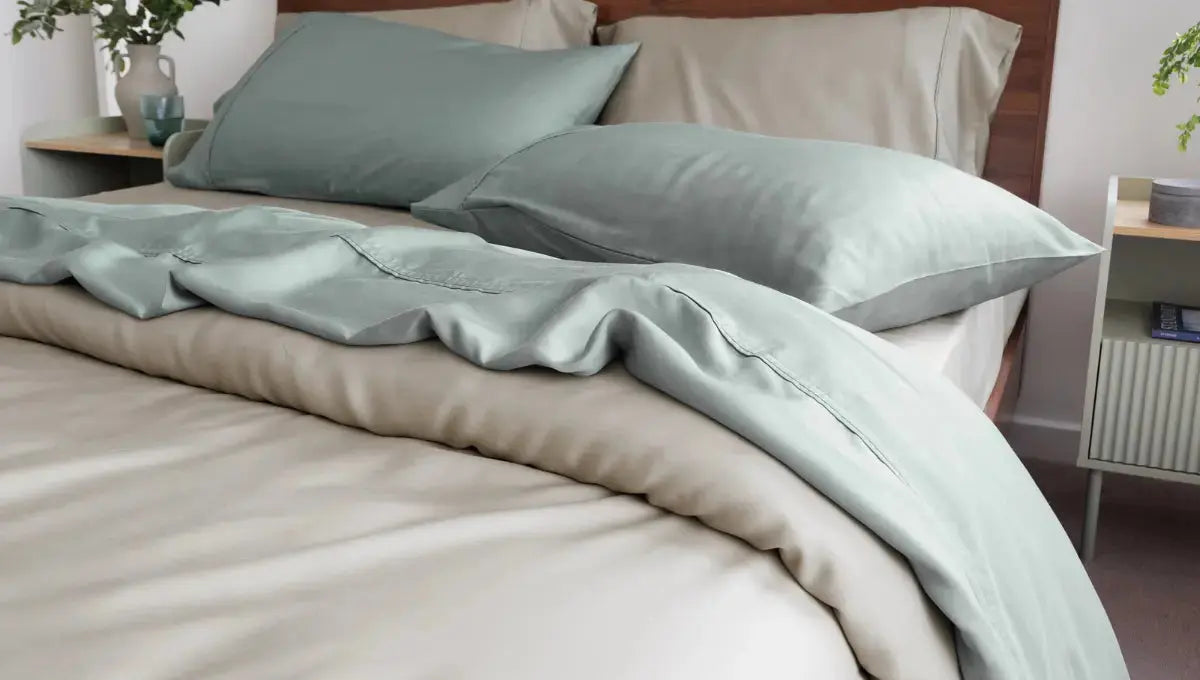
Sateen, on the other hand, doesn't have that grid. Instead, you have the smooth back of floating threads, which means the fabric feels smoother, silkier, and more drapey.
Finish
The two weaves also differ in terms of appearance. With percale, you get a matte finish, whereas sateen provides a subtle sheen. And, again, the difference in finish results from the difference in weave structure between the two.
Breathability
In terms of breathability, percale allows more air to move through the fabric because of the tiny gaps at the crossing points. With sateen’s dense weave, it can hold onto more warmth, making it a better choice if you tend to feel cold at night or prefer warmer bedding.
Something to keep in mind, though. Fiber material can affect breathability. For instance, a heavy cotton percale naturally traps more heat than a bamboo sateen.
Weight
The difference in weight becomes noticeable in the way the sheets sit on your body. Percale generally has a lighter, more structured drape, so the fabric tends to hold its shape rather than drape closely around you. Sateen is completely different. Instead of holding its shape, the fabric falls more naturally around your body and mattress.
Care and Maintenance
Both percale and sateen weaves can generally be machine washed, but they don’t exactly have the same care and maintenance approach.
Since percale tends to wrinkle more easily due to its rigid structure, always wash it in cool water on a gentle cycle. And you will need to remove the sheets from the dryer promptly or iron them. This helps maintain its crisp texture without over-tightening the fibers.
Sateen is less prone to looking heavily wrinkled, but you have to be extra cautious with its surface because it is more susceptible to snagging.
Durability
Both weaves can be long-lasting with the proper care and maintenance. As we mentioned earlier, percale will gradually soften with washing, making it more comfortable over time. And yes, it doesn’t lose its structure. With more fibers exposed to friction, sateen is more susceptible to surface wear.
Cost
When it comes to cost, neither weave is automatically more expensive. The cost depends on the fabric, its quality, and the brand. As a matter of fact, you may find both budget-friendly and premium options in either weave. So, rather than choosing based on price alone, always consider your preferred level of comfort when sleeping.
Percale vs. Sateen: Which Weave Should You Choose?
Choosing between percale and sateen weaves comes down to how you want your bed to feel at the end of the day. If you’re a hot sleeper, percale may be the better choice for its lightweight, breathable feel. But if you want a softer, more enveloping feel with a little more warmth, sateen may suit you better.
Choose percale if you want:
- A crisp, structured feel
- A lighter and less ‘clingy’ fabric
- More airflow while you sleep
- A matte, understated appearance
- Sheets that gradually soften with washing
Choose sateen if you want:
- A subtle sheen
- A smooth, soft surface
- Fabric that drapes closely around your body
- Sheets that don’t show wrinkles as easily
- A smooth, soft surface
- Bedd that feels warmer and more enveloping
Something to keep in mind, though. Material choice matters just as much as weave, especially when comparing natural fibers with synthetics like polyester in bedding.
Common Questions About Percale and Sateen