

What Are Mattress Toppers For?
Ever settled on a mattress only to find your shoulders or hips take the brunt of its firmness? A cushioning topper can help by letting those pressure points settle into the surface instead of pressing so firmly against it. For instance, a memory foam topper molds to your body's contours, spreading pressure points over a wider area.
For Extending the Life of Your Mattress
Every night, your body weight puts pressure on the foam in your mattress. Over time, this can cause the material to lose its shape, leaving dips in areas where you sleep most often. A mattress topper takes some of the pressure off your mattress.
For Additional Support
If your mattress isn't worn out but you feel like your body is sinking in too much, as if you are being engulfed, an additional layer can make you feel more supported. If you want more support, choose a firmer and thicker topper.
For Temperature Regulation
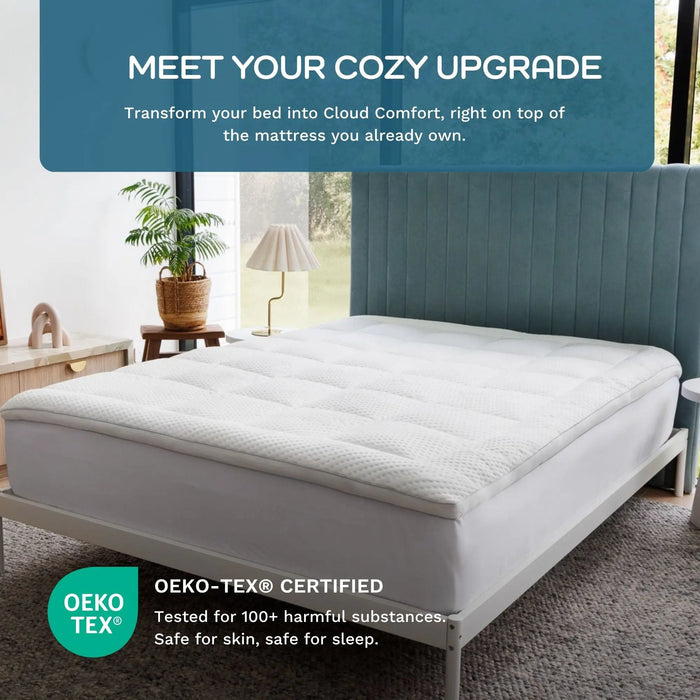
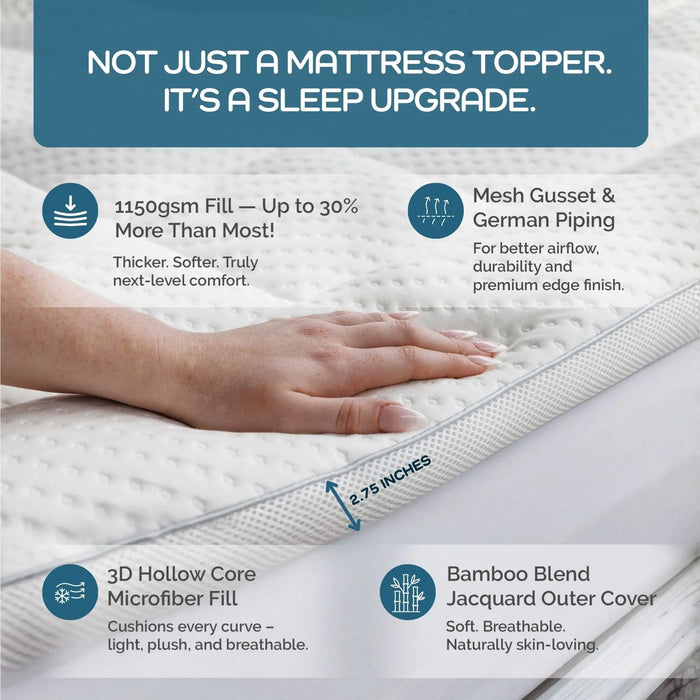
Another purpose of a mattress topper is to help release trapped heat. Options like the Olive + Crate Bamboo Topper feature moisture-wicking 3D microfiber fill (1150gsm), breathable airflow layers, and a bamboo-blend jacquard outer cover for maximum airflow night after night.
Of course, not every mattress topper is breathable. For instance, a memory foam topper might contour to your body, but its closed-cell structure restricts airflow and keeps body heat trapped.
When Should You Get a Mattress Topper
You should get a mattress topper when your mattress is still in good condition, but its firmness or softness isn't to your liking. As we mentioned earlier, a mattress topper sits on top of the mattress and, depending on its thickness and material, can make your bed more supportive or softer.
Here are two other reasons you should get a mattress topper:
- You experience pressure on your hips, shoulders, or back: If you are a back or side sleeper, a firm or unsupportive mattress can put too much pressure on these areas, leaving you sore in the morning. A mattress topper adds a cushioning layer between you and the mattress, relieving pressure by letting your shoulders and hips sink in slightly instead of bearing the full force of your body weight.
- You are a hot sleeper: A densely packed mattress can trap heat between your body and the sleep surface, leaving you feeling hot and sweaty, especially on warm summer nights. A breathable mattress topper can help improve airflow around your body, making it easier to stay comfortable while you sleep.
When You Shouldn't Get a Mattress Topper
Despite the benefits of a mattress topper, there are circumstances when you should skip one. For instance, if you already love your mattress, don't have any uncomfortable pressure points, but want subtle improvements, a mattress pad may be a better option because it doesn't drastically change how your mattress feels.
Another reason you should skip a mattress topper? Your mattress is well past its life. A mattress topper won't magically make a sagging mattress feel more comfortable or supportive. If your bed already has visible dips or lumps, it's better to replace the mattress.
Common Questions About Mattress Topper