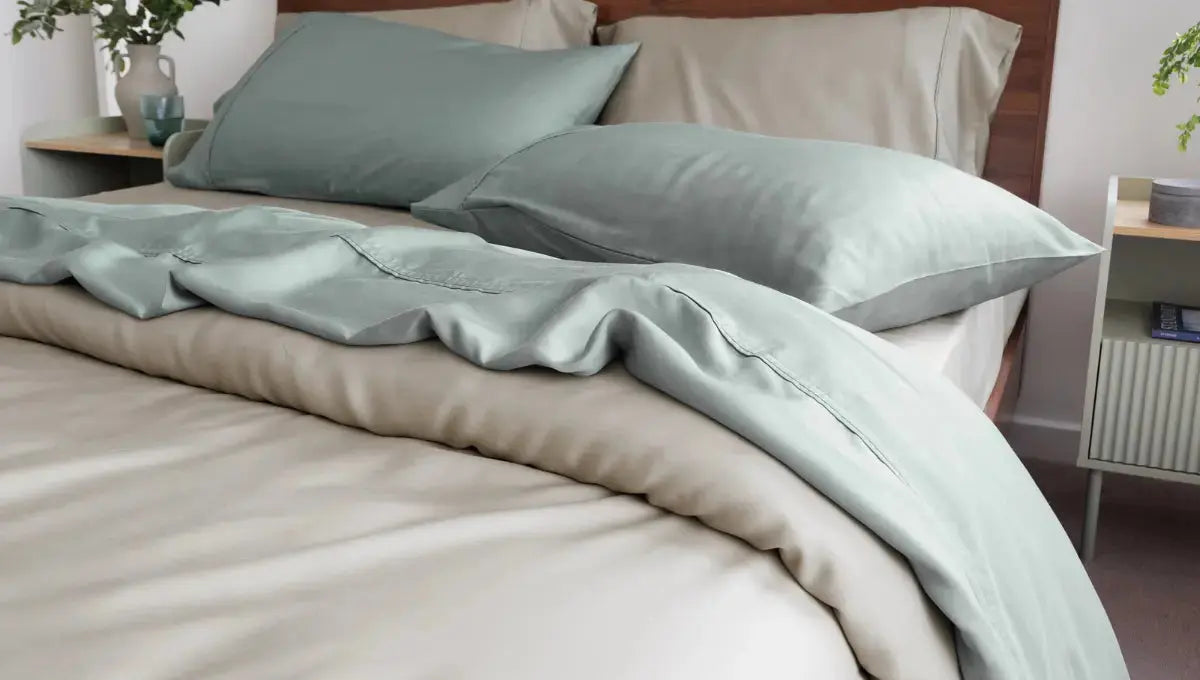



Spring bedding ideas usually come down to one thing. Your bed starts to feel too warm, too heavy, or harder to get comfortable in.
You don’t need to replace everything. A few small changes can make it feel lighter, cooler, and easier to settle into again.
How Your Bed Changes in Spring
The main difference is how much layering you actually need.
What worked in winter often feels like too much now. The top layer traps more heat than necessary, and the bed feels slightly overbuilt.
Spring bedding is about scaling that back. Fewer layers. Lighter materials. A setup that doesn’t need constant adjusting during the night.
Easiest Ways to Refresh Bed for Spring
1. Replace the top layer with something that sits flatter
Your top layer holds the most heat. If it feels too warm, it’s usually because it traps air and sits too high off the body.
Better options:
-
A low-loft comforter used on its own
-
A quilt that stays closer to the body
-
A duvet insert folded at the foot of the bed
A good example is the lightweight bamboo comforter, which is designed to regulate temperature and wick moisture while staying soft and breathable.
Bamboo fibers naturally allow airflow, so you still feel covered without overheating.

A low-loft comforter keeps coverage without trapping excess heat.
2. Reduce how many layers overlap each other
Layering traps heat between fabrics. Even breathable materials can feel warm if too many are stacked together.
Instead:
-
Use either a flat sheet or a top layer if you run warm
-
Remove decorative throws that don’t serve a purpose
-
Let one layer carry the look instead of dividing it across several
This makes the bed feel calmer and easier to manage at night.

A bed that feels open starts with fewer layers and softer contrast.
If you want to take that further, small layout changes can have the same effect, especially when you’re working toward a more open, balanced bedroom layout that doesn’t rely on adding more.
3. Upgrade the base layer where you actually feel it
If your bed feels warm as soon as you lie down, the issue is usually the sheets.
Switching to cool-to-the-touch TENCEL™ bed sheets can make the biggest difference because TENCEL™ fibers are smooth, breathable, and moisture-wicking, which helps regulate temperature through the night.
You don’t need to change anything else to notice the effect.

4. Lighten the top third of the bed
This is the area you see first. If it feels heavy, the whole bed does.
-
Swap in TENCEL™pillowcases with a smoother finish
-
Reduce the number of pillows if it feels crowded
-
Keep tones soft and close together
Smoother pillow fabrics also reduce friction and feel cooler against the skin, which helps at the start of the night.

Keeping tones close together softens the look and reduces visual weight.
5. Use a duvet cover only if it adds something
In spring, duvet covers often add unnecessary weight.
Instead of defaulting to one:
-
Use your comforter on its own if it looks clean
-
Or switch to a lightweight TENCEL™ duvet cover if you want a softer outer layer
TENCEL™ covers feel lighter and smoother than traditional cotton and help maintain airflow rather than trapping heat.
6. Let air move through the bed
A bed can feel warm simply because heat has nowhere to go.
-
Leave the sides slightly untucked
-
Avoid sealing the bottom edge tightly
-
Fold the top layer back enough to expose part of the sheet
These small adjustments help release heat instead of holding it inside.
7. Keep what you don’t see just as breathable
The base of the bed matters more than people think. A dense or synthetic layer underneath can hold heat even if everything above it is light.
Using a breathable bamboo mattress protector helps keep airflow consistent while protecting the mattress.
Bamboo is naturally moisture-wicking and allows better ventilation than traditional protectors.
8. Remove one thing before adding anything new
Before buying anything, take something away.
-
An extra throw
-
A second blanket
-
One set of pillows
Then leave it for a few nights.
Most of the time, the bed already feels better. If it doesn’t, you’ll know exactly what’s missing.
Which materials feel better in spring?
Fabrics that stay comfortable without holding heat
Material becomes noticeable the moment you get into bed. If it feels warm right away, it usually stays that way.
TENCEL™ is one of the easiest switches because it feels cool on contact and stays consistent through the night. It doesn’t trap heat, and it doesn’t cling.
Bamboo works differently. It’s softer and more airy, so it allows airflow without feeling dry or stiff.
Cotton still works, but only in lighter weaves. Percale feels crisp and breathable. Heavier sateen tends to hold warmth longer than you want in spring.
If you’re deciding between them, it helps to look at how bamboo, cotton, and eucalyptus sheets compare in real use.
What Colors Make a Bed Feel Lighter?
Use tone to reduce visual weight
Color changes how heavy a bed feels before you even touch it.
When contrast is high, the bed looks more layered and more defined. That makes it feel heavier, even if the materials are light.
Keeping tones closer together softens that effect.
-
Warm white with soft sand
-
Pale sage with muted olive
-
Light grey with a slightly warmer grey
These combinations blend instead of breaking the surface.
If you’re unsure where to start, it helps to lean toward softer, barely-there palettes where everything stays within a gentle range instead of pulling in contrast.
If you want to refine combinations further, it helps to see how bedding colors can shift naturally across seasons.
Should You Choose a Full Set or Build Your Own Layers?
Choose based on how you use your bed
This comes down to how much you adjust your bedding during the night.
-
A full set keeps everything consistent
-
Separate layers give you flexibility
-
A mix usually works best over time
The right setup is the one that doesn’t need constant fixing.
How Your Bedding Shapes the Rest of your Bedroom
Let the bed set the tone
Once the bed feels lighter, the room follows.
Light reflects more easily. The space feels less crowded. The bed blends into the room instead of standing out.
That shift becomes more noticeable when you’re arranging your bedroom in a way that supports balance and flow using feng shui principles. Everything starts to feel more in place without changing much else.