


During sleep awareness week, we are invited to pause and notice what may be quietly interfering with rest.
Often it is not one obvious problem, but small, subtle disruptions in our rhythm and environment that accumulate over time.
Gentle note: This article is for informational purposes only and does not replace medical advice.
What Is Sleep Awareness Week and Why Do We Observe It?
Sleep Awareness Week is an annual reminder to examine how we’re actually sleeping, not just how many hours we’re getting.
It brings attention to the everyday habits and patterns that shape rest over time.
When sleep becomes irregular or strained, those shifts often surface quietly in daily life through low energy, reduced focus, or subtle mood changes.
When Is Sleep Awareness Week Each Year?
It takes place annually in March.
It often aligns with the shift into daylight saving time, a period when many people experience noticeable changes in sleep timing and energy levels.
Organizations focused on sleep health use this time to share research-based education and encourage practical awareness.
-
Held each year in March
-
Frequently coincides with daylight saving time
-
Supported by national sleep advocacy groups
-
Designed to increase public understanding of healthy sleep habits
Is There a National Sleep Day Too?
National Sleep Day, often recognized globally as World Sleep Day, occurs during the same period in March.
It expands the conversation beyond one region and reinforces the universal importance of consistent, restorative sleep.
Together, these observances create a focused opportunity to reflect on whether your rest feels truly supportive or quietly strained.
Why Is It Important to Sleep at Night Instead of the Day?
The answer begins with circadian biology.
Humans operate on an internal clock that follows a roughly 24-hour cycle. This circadian rhythm is synchronized by natural light and darkness.
When sleep occurs at night and wakefulness during the day, the body functions with less internal resistance.
How Your Circadian Rhythm Responds to Light
As evening light fades, the brain increases melatonin production. This hormone signals the body to prepare for sleep. Core body temperature decreases slightly. Alertness softens.
In the morning, exposure to light suppresses melatonin and increases cortisol, promoting wakefulness and alertness. These changes are consistent and predictable when light exposure aligns with natural patterns.
What Happens When We Reverse That Rhythm?
When sleep regularly occurs during the day and activity extends late into the night, the body must compensate.
Research on circadian misalignment shows that disruption to natural light cues can influence:
-
Hormone timing
-
Body temperature regulation
-
Cognitive performance
-
Emotional regulation
Repeated misalignment introduces subtle disruption to systems that depend on consistent signals. The body adapts, but adaptation often requires effort.
Over time, that effort can leave sleep feeling lighter or less restorative.
What Can You Actually Do During Sleep Awareness Day?
On sleep awareness day, improvement does not require dramatic overhaul. Reducing disruption often begins with small, steady adjustments.
Small Shifts That Gently Reset Your Rhythm
Consistency is more powerful than perfection.
If your sleep timing feels misaligned, you can reset your sleep schedule without forcing it by making gradual changes rather than sudden ones.
Reset your sleep schedule without forcing it by moving bedtime earlier in fifteen-minute increments or increasing exposure to natural morning light.
Gentle adjustment reduces internal strain.
Build Daily Habits That Support Rest Naturally
Sleep is shaped by daytime behavior as much as by nighttime routine. Establishing simple daily habits that bring steadiness to your evenings can smooth the transition into rest.
-
Step outside within 30 minutes of waking
-
Dim overhead lights after sunset
-
Keep sleep and wake times consistent
-
Limit caffeine later in the day
These signals help the body anticipate rest. Over time, they reduce the subtle push and pull that can make sleep feel harder than necessary.
How Your Sleep Environment Quietly Shapes the Night
Sleep quality is influenced not only by timing, but by the space where it happens. Often, subtle disruptions originate in the environment.
Temperature, Texture, and the Feel of the Room
Thermal comfort plays a measurable role in sleep stages. Air that is too warm can increase restlessness. Bedding that retains excess heat may interfere with deeper phases of sleep.
Understanding how bedroom temperature shifts with age and season can help you make informed adjustments.
Breathable materials and thoughtful layering support airflow. Sustainable natural fibers often regulate temperature more effectively, reducing the effort the body must expend to maintain balance overnight.
The Role of Pillow Height in Neck Alignment
Neck position influences muscle tension throughout the night. Finding the right pillow height for your sleep style can reduce strain and support neutral alignment.
Side sleepers generally benefit from higher loft to fill shoulder space. Back sleepers often require moderate support. Even slight misalignment can create muscle activation that persists for hours.
Reducing this small physical disruption can make mornings feel noticeably steadier.
Protective Layers That Keep Your Bed Fresh and Breathable
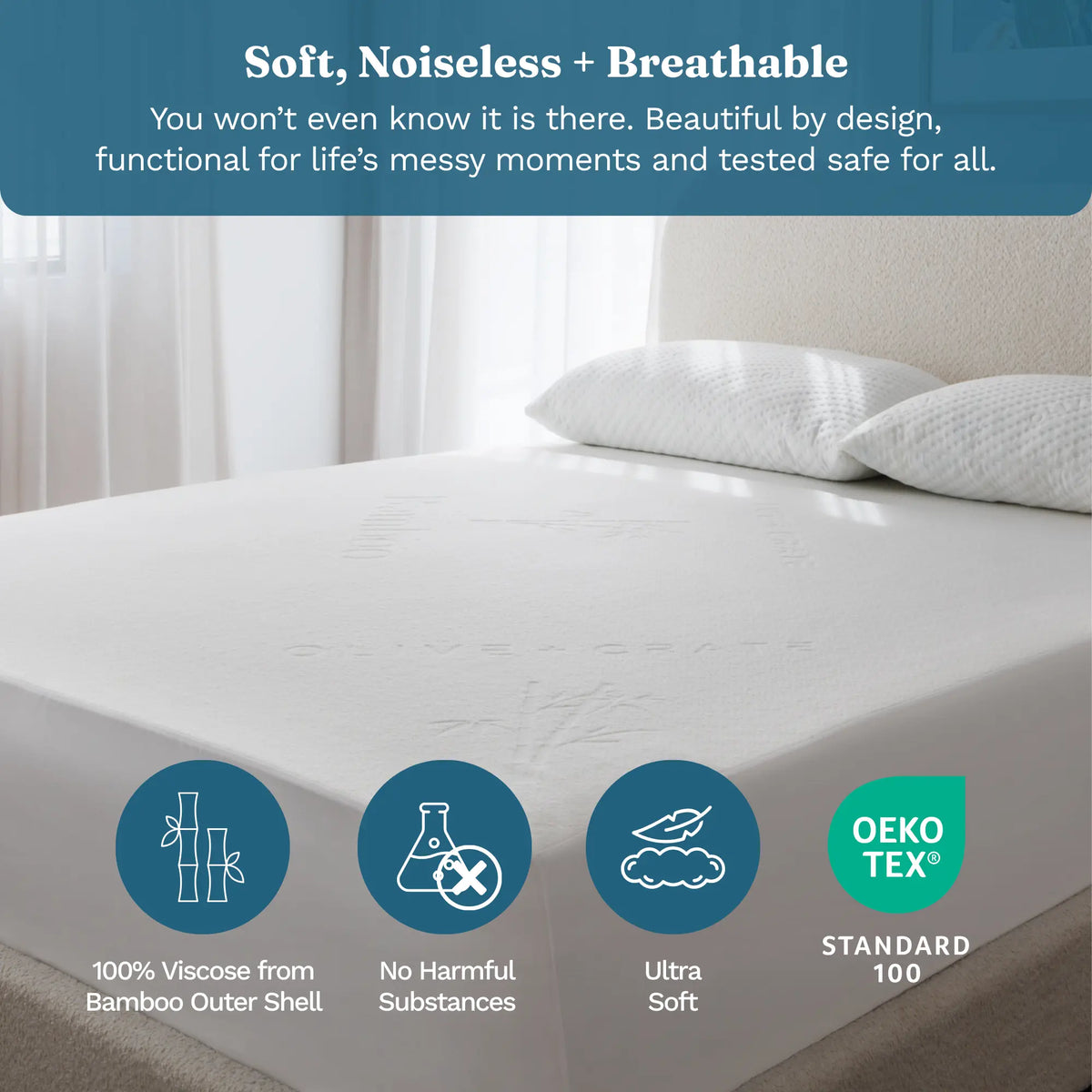
Protection should not compromise comfort. A breathable bamboo mattress protector that stays cool against the skin can guard against moisture while maintaining airflow.
Bamboo-derived fabrics are known for softness and temperature regulation, aligning comfort with sustainability.
Craftsmanship plays a quiet role here. Well-designed protective layers minimize disruption rather than adding to it.
When You Might Need Additional Insomnia Resources
If difficulty falling or staying asleep continues despite environmental and schedule adjustments, additional insomnia resources may be helpful.
Persistent sleep challenges can stem from stress, underlying medical conditions, or circadian rhythm disorders that require professional evaluation.
Environmental considerations worth reviewing include:
-
Light exposure
-
Sound levels
-
Bedding materials
-
Airflow
-
Mattress protection
Why Sleep Awareness Week Is Really About Paying Attention
A single week of attention can reveal what has been slightly misaligned and offer the opportunity to adjust gently.
Over time, those small refinements shape a more supportive rhythm, one that honors both the biology of sleep and the environment that holds it.
External Sources for Further Reading
National Sleep Foundation. (n.d.). Sleep Awareness Week. Retrieved from https://www.thensf.org/sleep-awareness-week/
Circadian rhythm and sleep disruption research. Potter, G. D. M., Skene, D. J., Arendt, J., Cade, J. E., Grant, P. J., & Hardie, L. J. (2016). Circadian rhythm and sleep disruption: Causes, metabolic consequences, and countermeasures. Endocrine Reviews, 37(6), 584–608. Retrieved from https://pmc.ncbi.nlm.nih.gov/articles/PMC5142605/
Circadian misalignment and health outcomes. Wright, K. P., Jr., McHill, A. W., Birks, B. R., Griffin, B. R., Rusterholz, T., & Chinoy, E. D. (2013). Circadian misalignment and health. Retrieved from https://pmc.ncbi.nlm.nih.gov/articles/PMC4677771/
Insomnia screening and intervention tools. Center for Deployment Psychology. (n.d.). Insomnia tools. Retrieved from https://deploymentpsych.org/content/insomnia-tools