


Sleep shapes nearly every system in the body, yet many of us rely on assumptions rather than evidence when it comes to how it works.
Understanding real sleep facts helps us separate habit from physiology and approach rest with more clarity.
Gentle note: This article is for informational purposes only and does not replace medical advice.
Why Does Sleep Matter More Than We Realize?
A steady night of rest does more than ease tired eyes. It quietly coordinates repair, regulation, and resilience across the entire body.
What Happens in the Brain and Body Overnight
While you sleep, activity shifts rather than stops. The brain enters organized cycles that allow different systems to reset and recalibrate.
Memory consolidation and learning integration
Neural connections formed during the day are strengthened and sorted, helping experiences become long-term memory.
Controlled laboratory findings on sleep-dependent memory consolidation and learning retention show that both slow-wave and REM sleep contribute to cognitive integration.
Hormonal balance
Cortisol follows a natural rhythm, growth hormone supports tissue repair, and melatonin rises and falls in response to light exposure.
Research examining circadian regulation and endocrine function during sleep cycles confirms that disrupted sleep alters cortisol timing and metabolic signaling.
Cellular repair and immune regulation
Deep sleep supports muscle recovery and immune signaling, reinforcing the body’s ability to respond to stress.
Investigations into immune system modulation during deep sleep stages demonstrate measurable shifts in inflammatory markers when rest is shortened.
Emotional processing and nervous system reset
REM sleep plays a role in processing emotional experiences and maintaining mood stability.
Neuroimaging evidence exploring REM sleep and emotional regulation in the brain shows that sleep restriction heightens amygdala reactivity.
Researchers in sleep medicine consistently link these cycles to cognitive performance and metabolic regulation.
When sleep becomes fragmented or shortened, these systems lose synchronization, a pattern repeatedly observed in longitudinal research on chronic sleep restriction and inflammation.
Sleep Facts and Health: The Long-Term Impact
The effects of sleep do not stop at morning alertness. They accumulate quietly across years, influencing how the heart, metabolism, and brain function over time.
Large population analyses examining habitual sleep duration and cardiometabolic risk factors show consistent associations between chronic short sleep and:
-
Elevated blood pressure
-
Reduced insulin sensitivity
-
Increased systemic inflammation
Sleep consistency also matters.
Evidence from prospective studies linking sleep patterns with long-term mortality risk suggests that both insufficient and highly irregular sleep correlate with measurable shifts in long-term health outcomes.
Disrupted sleep patterns have been associated with:
-
Greater cardiovascular strain
-
Impaired glucose metabolism
-
Reduced cognitive resilience
Age naturally reshapes how sleep feels and functions. Documented age-related changes in sleep architecture across the lifespan show that over time we experience:
-
Less slow-wave deep sleep
-
Changes in REM distribution
-
More nighttime awakenings
Over time, consistency steadies blood sugar, supports cardiovascular function, and keeps the nervous system regulated.
That steady repetition is why small nightly habits influence long-term well-being and continue to be emphasized during seasonal awareness efforts.
Is 8 Hours of Sleep a Myth? Or a Helpful Guideline?
Where the 8-Hour Standard Originated
The eight-hour framework gained popularity during the industrial era, when labor movements advocated for balanced days divided into work, leisure, and rest.
Historical analyses exploring segmented sleep patterns in preindustrial societies suggest consolidated eight-hour sleep became more common after artificial lighting extended evening wakefulness.
What Research Says About Individual Sleep Needs
Modern sleep research points toward ranges rather than fixed numbers.
Most adults function best between 7–9 hours
Comprehensive reviews of optimal adult sleep duration and health outcomes consistently identify this window as supportive for cognitive and metabolic performance.
Genetics influence ideal duration
Genetic research investigating naturally short sleepers and sleep efficiency markers has identified rare variants associated with reduced sleep need without impairment.
Age shifts requirements over time
Sleep architecture changes across the lifespan, including how sleep needs shift during adolescence as circadian rhythms temporarily delay.
Eight hours can be a helpful anchor, but flexibility matters. Rest is a biological process shaped by context, age, and environment.
Is Catching Up on Sleep a Myth?
What Sleep Debt Actually Means
Sleep debt refers to the cumulative effect of insufficient rest.
While extra hours can reduce immediate fatigue, they do not fully reverse circadian misalignment.
Controlled experiments examining metabolic consequences of chronic sleep restriction show that hormonal alterations can persist even when recovery sleep is attempted.
The body’s internal clock thrives on consistency. Research exploring circadian disruption and glucose metabolism patterns demonstrates that irregular timing alone can impair insulin sensitivity.
This is why even small shifts matter, and why even a one-hour time shift affects the body clock more than many people expect.
Interesting Facts About Sleep Deprivation
Short-term deprivation can have measurable effects.
Cognitive impairment comparable to mild intoxication
After approximately 24 hours without sleep, reaction time and executive function decline significantly, a finding documented in controlled sleep deprivation performance trials.
Hormonal disruption
Appetite-regulating hormones shift, often increasing cravings for energy-dense foods, as shown in clinical studies on leptin and ghrelin changes after restricted sleep.
Increased emotional reactivity
Functional imaging research examining amygdala activation under sleep loss conditions reinforces the connection between sleep stability and emotional regulation.
One controlled study found that participants limited to six hours of sleep per night for two weeks performed cognitively similar to those awake for 24 consecutive hours.
That perspective reframes occasional late nights as more than harmless inconvenience.
5 Common Sleep Myths Debunked
Looking at common myths about sleep more directly helps us replace rigid thinking with informed choices.
Myth #1: Screens Before Bed Always Ruin Your Sleep
It’s easy to blame the phone. The reality is more nuanced.
What’s true:
-
Blue light can delay melatonin release when exposure happens close to bedtime.
-
Bright light signals the brain to stay alert.
What’s often overlooked:
-
Emotional stimulation keeps the nervous system active.
-
Work emails or intense content can elevate stress hormones.
-
Interactive scrolling prolongs mental engagement.
So it isn’t just the device. It’s the intensity, brightness, and timing.
Instead of strict elimination, awareness tends to work better.
Dimming screens, shifting to low-stimulation content, or creating small ways to unplug in the evening can soften the transition into rest without turning bedtime into a rulebook.
Myth #2: There Is One Perfect Sleeping Position for Everyone
You may have heard that back sleeping is best. There is no universal posture.
Sleep position depends on:
-
Body structure and shoulder width
-
Existing neck or back sensitivity
-
Mattress firmness
-
Pillow height and density
A side sleeper usually needs more loft to fill the space between ear and shoulder. A back sleeper may need lower, more contouring support.
Small adjustments matter. Understanding how pillow height affects alignment overnight can improve comfort far more than copying a recommended pose.
Support should follow your body. Not the other way around.
Myth #3: Co-Sleeping Is Always Good or Always Harmful
Sharing a bed is often framed in extremes. It either guarantees connection or guarantees disturbance. Neither is entirely accurate.
What research suggests:
-
Physical closeness can lower stress markers in some couples.
-
Oxytocin release may promote feelings of safety and relaxation.
This supports how physical closeness influences nighttime calm.
What also happens:
-
Movement can fragment sleep.
-
Different temperature preferences can create discomfort.
-
Mismatched sleep schedules may reduce total rest.
Thoughtful adjustments often make the difference. Exploring comfortable shared sleeping positions for couples can reduce pressure and improve alignment for both partners.
Co-sleeping is not inherently good or bad. It depends on the environment and the support beneath you.
Myth #4: You Can Fully Catch Up on Sleep Over the Weekend
It feels reassuring to believe that one long morning can undo a week of short nights. Sleep physiology is less forgiving.
While extra hours can reduce immediate fatigue, they do not completely reset circadian timing or reverse metabolic shifts caused by chronic restriction.
What often happens instead:
-
Bedtime drifts later
-
Wake time shifts forward
-
Monday feels harder
Consistency matters more than compensation. Sleep responds to regularity, not extremes.
Myth #5: Less Sleep Means You’re More Productive
In many cultures, short sleep is worn as a badge of discipline. Biologically, the opposite is usually true.
Research on sleep deprivation consistently shows:
-
Slower reaction time
-
Reduced decision-making accuracy
-
Increased emotional reactivity
-
Higher perceived stress
Even modest restriction over several nights can impair cognitive performance in ways that feel subtle but accumulate quickly.
Rest is not indulgent. It protects clarity, emotional balance, and long-term resilience.
Rethinking What We Believe About Sleep
Sleep tends to improve when your days follow a steady rhythm and your bedroom feels comfortable.
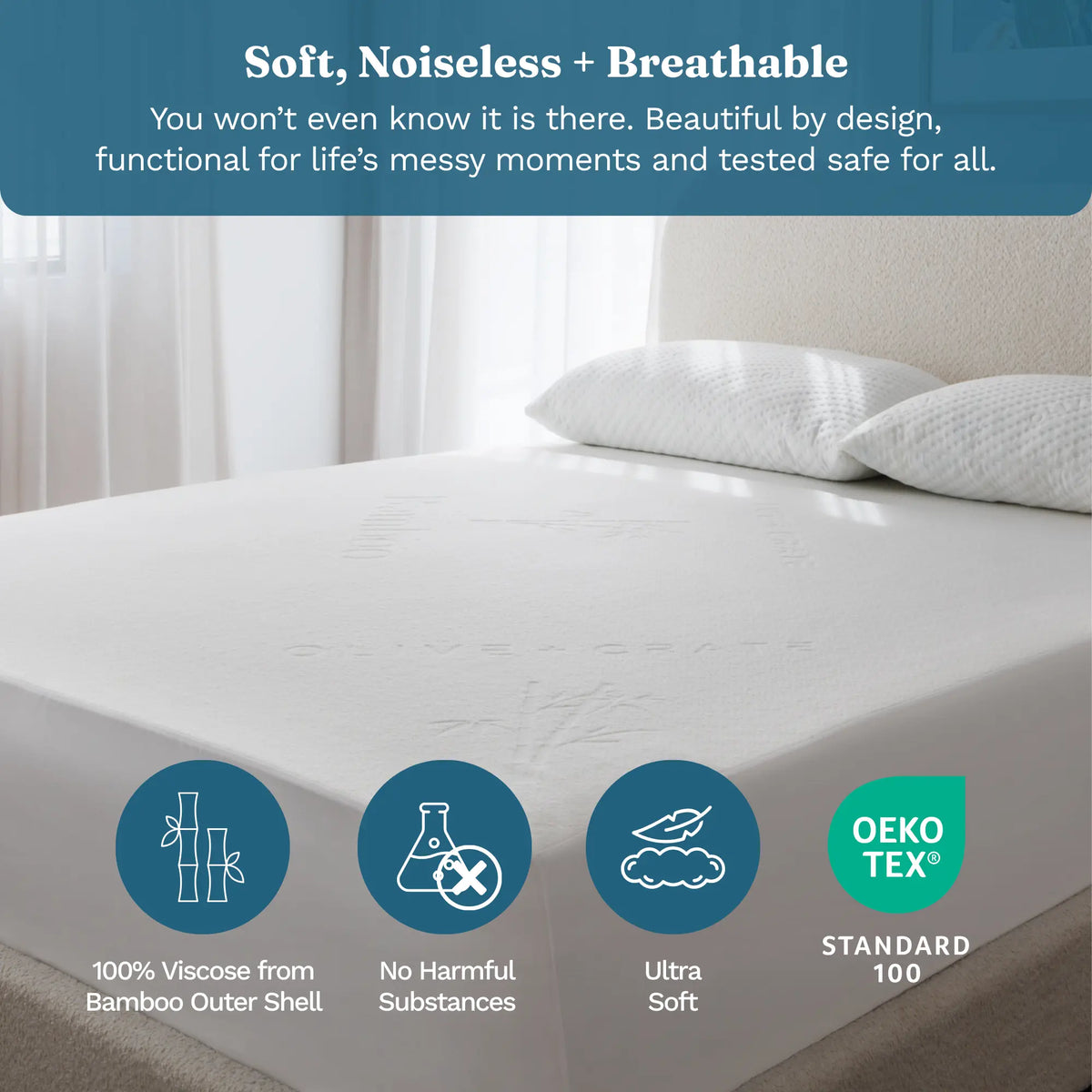
Accurate information takes away some of the pressure. Rest becomes easier when you notice what helps you settle and what does not. A thoughtfully designed space, made with natural materials, can make that shift feel simple.
External Sources for Further Reading
Chronic sleep restriction and its effects on metabolic and cardiovascular health
https://pmc.ncbi.nlm.nih.gov/articles/PMC3763921/
Sleep and circadian disruption in relation to hormonal and metabolic function
https://pmc.ncbi.nlm.nih.gov/articles/PMC4377487/
Sleep duration and long-term cardiovascular risk
https://pmc.ncbi.nlm.nih.gov/articles/PMC2845795/
The cognitive effects of moderate sleep deprivation
https://pmc.ncbi.nlm.nih.gov/articles/PMC1739867/
Emotional brain processing and sleep regulation
https://pmc.ncbi.nlm.nih.gov/articles/PMC2890316/
Global patterns of irregular sleep and health outcomes
https://www.sciencedirect.com/science/article/pii/S235272182300253X
Sleep restriction and memory performance review
https://www.sciencedirect.com/science/article/pii/S0028393225002556
Chronic partial sleep deprivation and cognitive performance in medical residents
https://www.researchgate.net/publication/230805047_The_Effects_of_Chronic_Partial_Sleep_Deprivation_on_Cognitive_Functions_of_Medical_Residents
Sleep loss and neural structure changes
https://pmc.ncbi.nlm.nih.gov/articles/PMC10104400/
Sleep deprivation and emotional regulation
https://pmc.ncbi.nlm.nih.gov/articles/PMC4286245/
Sleep duration and stress-related health markers
https://pmc.ncbi.nlm.nih.gov/articles/PMC3256323/
Sleep and long-term health risk markers
https://pmc.ncbi.nlm.nih.gov/articles/PMC5300306/