
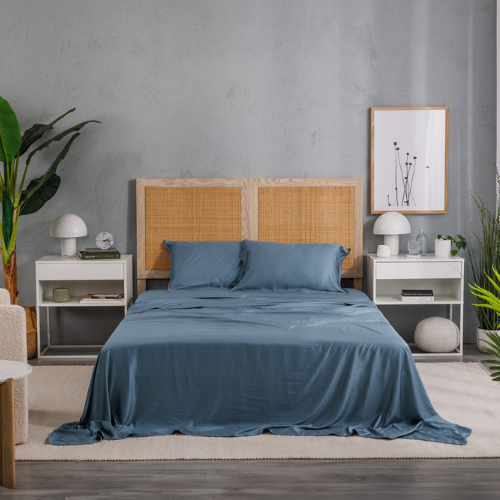

What Is Down Alternative?
Down alternative is not a fabric. It is essentially a filling made specifically to mimic the soft, fluffy feel of natural down. You’ll find it in pillows, duvets, and comforters, with many brands marketing it as a more affordable option.
Down alternative isn’t one specific material, though. You’ll find some products using polyester fibers, while others use recycled synthetics instead (more on these later!). So, why is down alternative popular? It is expensive, easy to care for, and offers a similar softness to natural down.
What Is a Down Alternative Made Of?
As we mentioned earlier, down alternative materials can fall into a few broad categories. Typically, they are made from synthetic fibers like polyester or microfiber, recycled synthetic fills, or plant-based fibers.
Synthetic Fibers (Polyester or Microfiber)
Synthetic fibers are the most common material for a down alternative because they offer consistent shape and loft, are less likely to clump over time, and are widely available and affordable. To achieve a fluffy, lightweight feel, manufacturers engineer fine synthetic fibers to trap air.
Recycled Synthetic Fills
As for recycled synthetic fills, they are essentially synthetic fibers made partly or entirely from reclaimed materials. That doesn’t mean the feel and performance are drastically different from conventional polyester. As a matter of fact, they are very similar.
The main difference is environmental impact rather than comfort. Performance still depends on fiber quality, density, and construction.
Plant-Based Fibers
Down alternative material is not limited to synthetic materials, though. Some bedding products incorporate plant-derived fibers, including regenerated cellulose fibers made from wood pulp. You may see materials such as TENCEL™ Lyocell. These are typically blended into fills or used in surrounding fabrics rather than as a pure fill replacement.
Plant-based fibers tend to:
- Feel smoother against the skin
- Manage moisture differently than synthetics
- Add breathability rather than insulation
They are often included to adjust how a comforter or pillow feels at the surface, especially for people sensitive to heat or humidity.
Down vs Down Alternative: Is there a Difference?
Both down and down alternative promise soft, cozy bedding, but they don't deliver that comfort in quite the same way. They also differ in how well they regulate temperature, how much care they need, and how they hold up over time. Here's a closer look at how down and down alternative compare.
Material and Production
The biggest difference between down and down alternative is what they’re made of. Down comes from natural materials, but contrary to what you might think, it isn’t made from the actual feathers of ducks and geese. Instead, it comes from the soft cluster found beneath their outer feathers. These clusters have a fluffy structure with tiny filaments that trap warm air.
For down alternatives, as mentioned earlier, they use polyester or recycled synthetic fibers. Polyester is made by combining two petroleum-derived chemicals. These are then heated, forming a material (PET) that can be spun into fine fibers. Like any bedding material, polyester isn’t necessarily bad. It has its pros and cons, and how it performs depends on the fibers and the construction.
Fill and Feel
When you are shopping for down, you will come across ‘fill power.’ This measures how much space one ounce of down occupies. When a down has a high fill power, it provides more warmth or insulation without being as heavy or bulky, which is ideal if you want a warm comforter that doesn’t feel like it’s pinning you down to the mattress.
Although down alternatives are designed to replicate the loft of down, down alternatives don’t use a fill power rating. Instead, manufacturers use fill weight or grams per square meter (GSM). To achieve the same insulation as natural down, they are more densely filled, which, in turn, makes them heavier.
So if you prefer a lighter, more stable feel, consider getting a down alternative. But for maximum warmth and a sink-in sensation, traditional down is better.
Maintenance and Durability
Washing a down isn’t always a quick Saturday-morning chore. It requires a little more attention, especially if you want to retain its loft or fluffiness. In most cases, you'll need professional cleaning, which is expensive. Down alternative is often less demanding and more forgiving. Many synthetic-filled comforters are machine washable and dryer-safe.
In terms of durability, down can retain its loft for many years (provided you take proper care of it, of course). Down alternative, on the other hand, typically lasts between 5 and 10 years, gradually flattening with frequent washing and use.
Cost
Down generally costs more upfront than down alternative because it uses natural material that needs to be collected, sorted, and processed. The higher the fill power and the more elaborate the construction, the more premium the price will be.
On the other hand, down alternative is more cost-effective, with options available across a broad range of price points. That’s because polyester is widely available. In fact, polyester leads global fiber production, accounting for 59%.
Is Down Alternative Toxic?
Down alternative is generally safe for everyday use. Polyester, one of the most common materials used in down alternatives, isn’t inherently harmful just because it’s synthetic.
Manufacturing processes can vary, and some textiles may use chemical finishes to achieve specific properties. If you’re concerned about potential chemical exposure, look for relevant certifications like OEKO-TEX.
People often choose it to avoid feathers or common irritants.
Common Questions About Down Alternative